
It is 2am and your brain will not stop. The presentation next week. That awkward thing you said at lunch. Whether you remembered to pay the electric bill. A dozen half-formed to-do items circling like a playlist on repeat.
You are not broken. You are carrying too much in your head. And the longer it stays there, the heavier it gets.
Brain dumping is one of the simplest, most effective ways to interrupt the overthinking cycle. It will not cure anxiety. But it can give your mind the one thing it is desperately asking for: relief.
Why anxiety and productivity are connected
Anxiety is not just a feeling. It is a cognitive load. Research from the University of Michigan shows that anxiety actively impairs working memory, the mental workspace you use to plan, reason, and make decisions. When anxiety takes up residence there, everything else suffers.
This creates a vicious cycle. You feel anxious about undone tasks. The anxiety makes it harder to think clearly. So you avoid the tasks. Which creates more anxiety. Repeat.
The American Psychological Association has found that this pattern is one of the most common drivers of procrastination. It is not laziness. It is a nervous system that has too many tabs open.
Breaking the cycle requires interrupting it at the cognitive level. Not by thinking harder, but by thinking less. By getting the clutter out of your head and into a form you can actually see.
What brain dumping does for an anxious mind
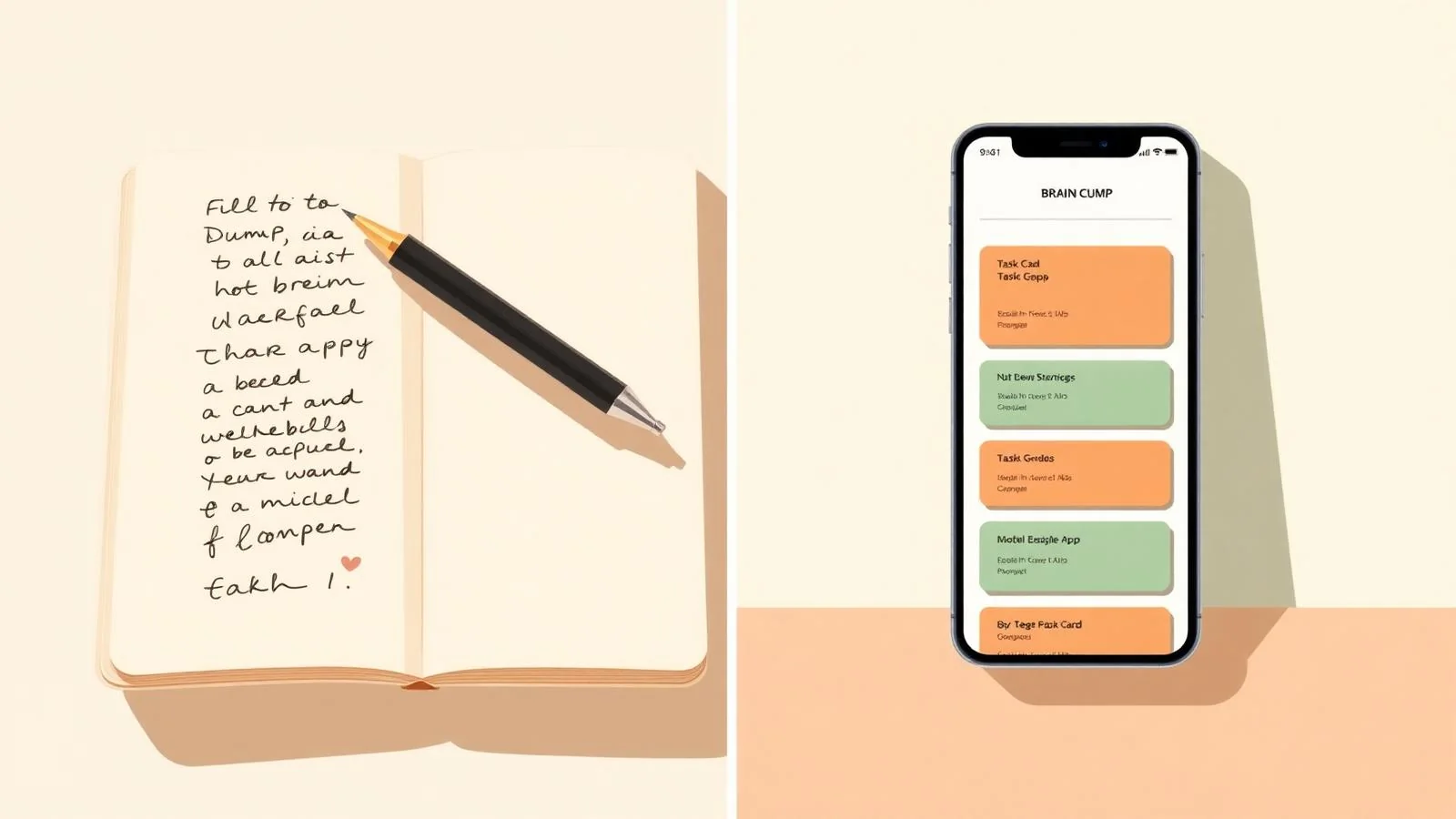
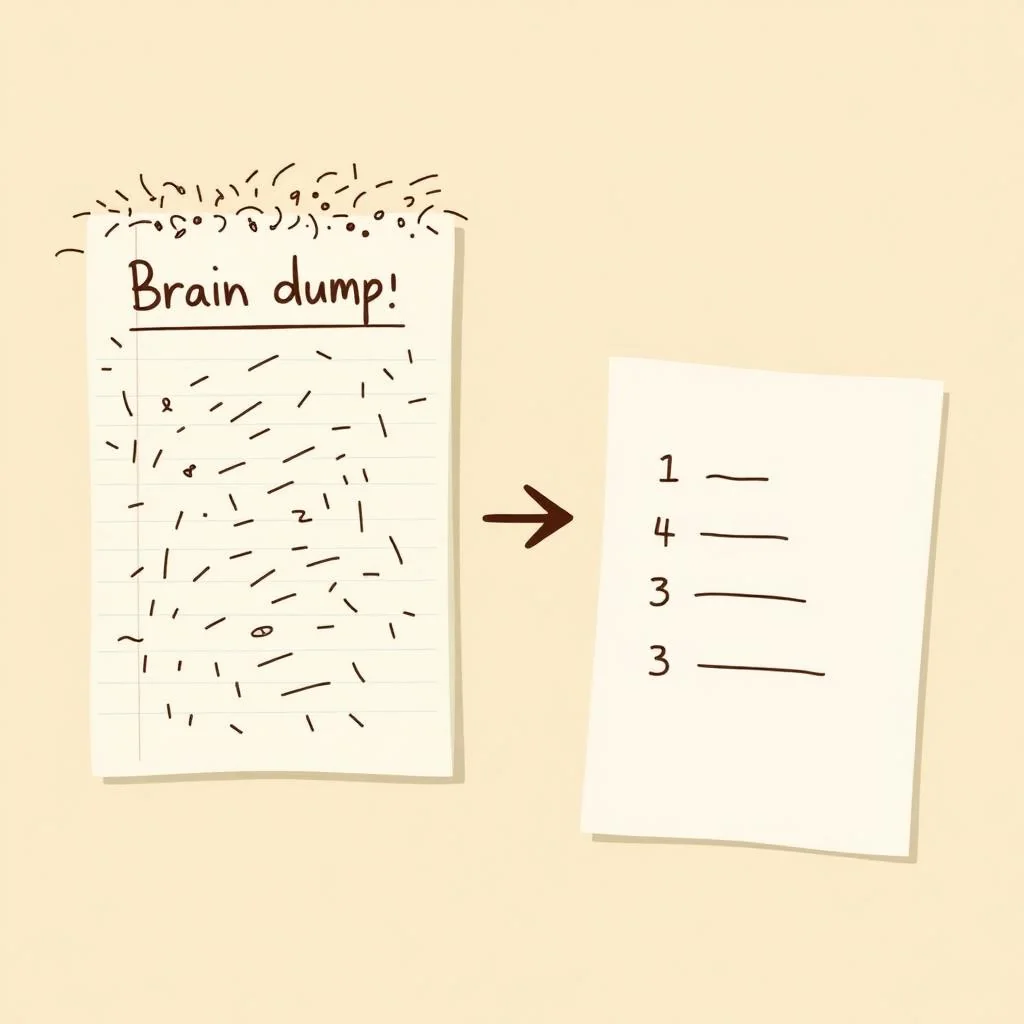
Brain dumping is the practice of writing down every single thought, task, worry, and idea in your head without editing or organizing. You just get it out. If you are unfamiliar with the technique, our complete guide to brain dumping covers the basics.
For anxious minds, the benefit is immediate. A 2011 study published in Science found that students who wrote about their worries before a high-pressure exam performed better. Participants who wrote about their worries freed up working memory that anxiety had been consuming.
Psychologists call this "cognitive offloading." Your brain treats unfinished tasks and unresolved worries as open loops. It keeps cycling back to them, burning energy to make sure you do not forget. When you write them down, you close the loop. Your brain can let go because the information exists somewhere safe.
This is why a brain dump often produces a physical sensation of relief. It is not placebo. Your nervous system is literally releasing tension that was being maintained to hold onto information.
The difference between venting and dumping
Not all getting-it-out-of-your-head strategies are equal. Venting, whether to a friend, in a journal, or in a notes app, can feel good in the moment. But research shows that unstructured venting often increases rumination rather than reducing it. You end up reliving the stress instead of processing it.
Brain dumping is different because it has a built-in next step. You are not just expressing feelings. You are externalizing thoughts so you can sort them. The goal is not to feel heard. It is to see clearly.
The key distinction is separating "actionable" from "emotional." Some things in your head are tasks you can do something about. Others are worries, regrets, or what-ifs that need a different kind of attention. A brain dump captures both, then helps you handle them differently.
Try a brain dump right now
It takes less than five minutes. Get everything out of your head and feel the difference immediately.
Start your brain dumpA simple brain dump routine for anxiety
You do not need a complicated system. Here is a five-step routine you can start today:
- Set a timer for 5 to 10 minutes. A time limit prevents spiraling. You are not journaling. You are emptying.
- Write everything down. Tasks, worries, ideas, random thoughts. No filtering, no prioritizing, no judgment. Just dump.
- Sort what is actionable. Once everything is out, separate the things you can actually do something about from the things you cannot. The Eisenhower Matrix is a useful framework here, sorting tasks by urgency and importance into four quadrants.
- Release the rest. The worries, the guilt, the hypotheticals. Acknowledge them, then consciously decide to put them down. They are not tasks. They do not belong on a to-do list.
- Pick one thing to do first. Not five things. One. Anxiety shrinks when you narrow your focus from "everything" to "this."
What to do with the non-actionable stuff
This is where most productivity advice falls short. It tells you to prioritize and plan. But what about the thoughts that are not tasks? The worry about a family member's health. The regret about something you said last year. The fear that you are falling behind in your career.
These thoughts consume enormous mental energy. They do not have deadlines or next steps, but they weigh just as much as any task. Maybe more.
Cognitive behavioral therapy research shows that acknowledging a worry and consciously choosing to release it breaks the rumination loop. You are not suppressing the thought. You are giving it a moment of attention, then deciding to stop carrying it.
This is exactly the purpose of letting go as a productivity practice. TaskDumpr includes a dedicated Let Go feature where you can write down what you want to release and watch it symbolically float away. It sounds simple. For many users, it is the most powerful part of the app.
Brain dumping for specific anxiety triggers
Different types of anxiety respond well to slightly different dump approaches:
- Work overwhelm:Dump every single work task, even the ones you think are small. Seeing the full list often reveals that the actual work is manageable. The anxiety was coming from trying to hold it all in memory.
- Decision fatigue:Write out all the decisions you are putting off. For each one, write the simplest possible next step. You do not need to decide everything today. You need to decide what to decide first.
- Social obligations:Dump every social commitment, response you owe, and relationship maintenance task. Then honestly mark which ones matter and which ones you are doing out of guilt. Give yourself permission to drop the guilt ones.
- Health worries:These are rarely actionable beyond "make an appointment." Dump them, schedule what you can, and release the rest into a Let Go session. Ruminating on health worries does not improve your health.
If you suspect your anxiety overlaps with attention difficulties, brain dumping for ADHD covers specific techniques for minds that process differently.
Why most productivity apps make anxiety worse
Open your typical task management app when you are feeling anxious. What do you see? A long list of overdue items. Color-coded urgency. Notifications reminding you of what you have not done. Dashboards tracking your declining productivity streak.
These apps are designed to track, not to heal. They treat your mental state as irrelevant. The implicit message is: you are behind. Catch up.
As we explored in why productivity apps are broken, this approach ignores decades of psychology research. Sustainable productivity requires emotional regulation first. You cannot organize your way out of overwhelm. You have to release pressure before you can think clearly.
An anxious person does not need more features. They need fewer demands. They need a tool that starts with "what is on your mind?" rather than "what is on your list?"
How TaskDumpr approaches anxiety differently
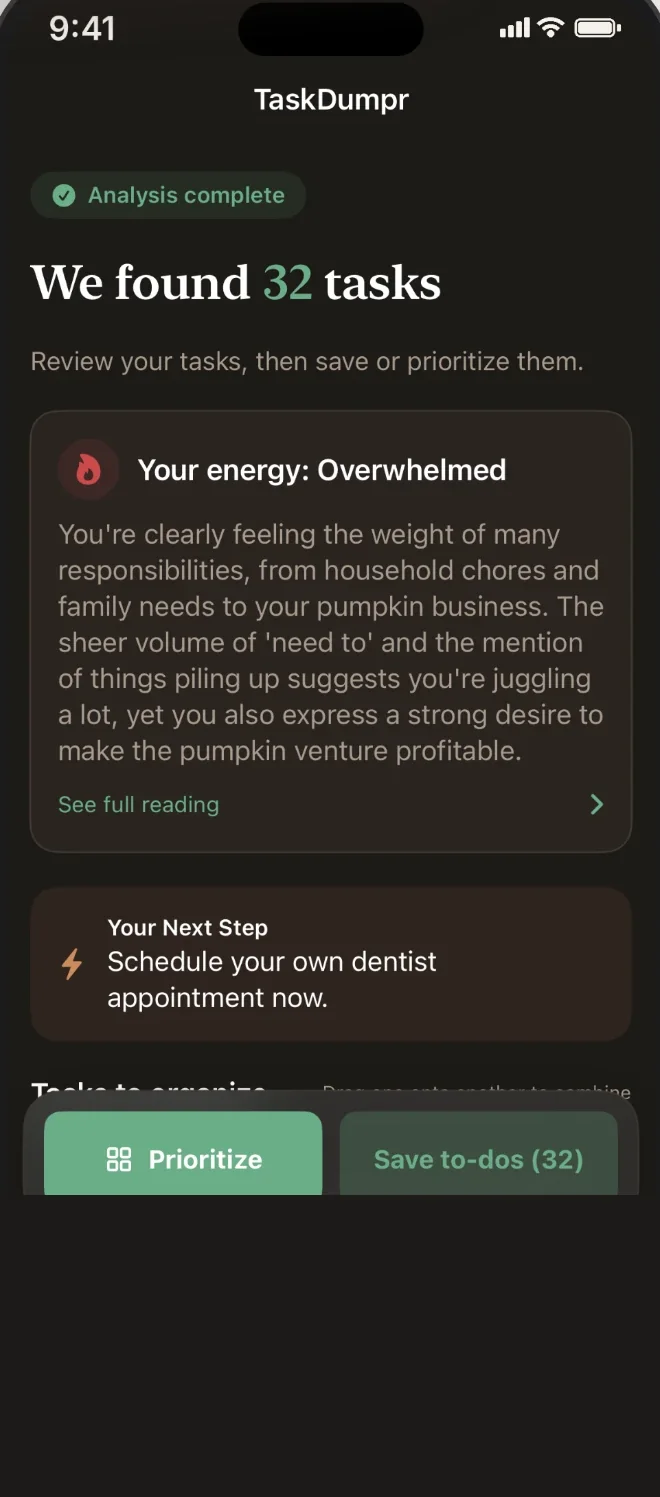
TaskDumpr was designed with overwhelmed minds in mind. The entire workflow reflects how anxious brains actually need to process:
- Voice input:When typing feels like too much, you can speak your brain dump instead. Lower the barrier from "write everything down" to "just talk."
- Sentiment analysis:The app reads the emotional tone of your dump and reflects it back. This small acknowledgment, "it sounds like you are carrying a lot," can be surprisingly grounding.
- The Eliminate quadrant:The Eisenhower Matrix explicitly includes a category for things that should not be done at all. This gives you permission to drop tasks, not just rearrange them.
- Let Go sessions:A dedicated space for the worries, regrets, and what-ifs that do not belong on any to-do list. Write them down and watch them float away.
The goal is not to make you more productive. It is to make you feel lighter. Productivity follows naturally when your mind is clear.
You do not need to think your way out of overthinking
Anxiety convinces you that if you just think about it enough, you will find the solution. But overthinking is not problem-solving. It is a loop. And the exit is not at the end of the loop. It is outside of it.
Brain dumping works because it changes the game. Instead of trying to organize your thoughts inside your head, where anxiety distorts everything, you put them somewhere you can see them. External. Concrete. Manageable.
You do not need to think your way out of overthinking. You need to get it out of your head first.
Try TaskDumpr free
Empty your head in one go and let TaskDumpr split it into sorted, prioritized tasks. No card needed.
Start a free brain dump