
Both involve writing. Both promise to clear your head. Both get recommended by therapists, productivity experts, and that one friend who swears by their morning routine. So what is the actual difference between brain dumping and journaling? And more importantly, which one will help you stop feeling overwhelmed and start getting things done?
The answer depends on what you need right now. And most people are using the wrong one.
What journaling is for
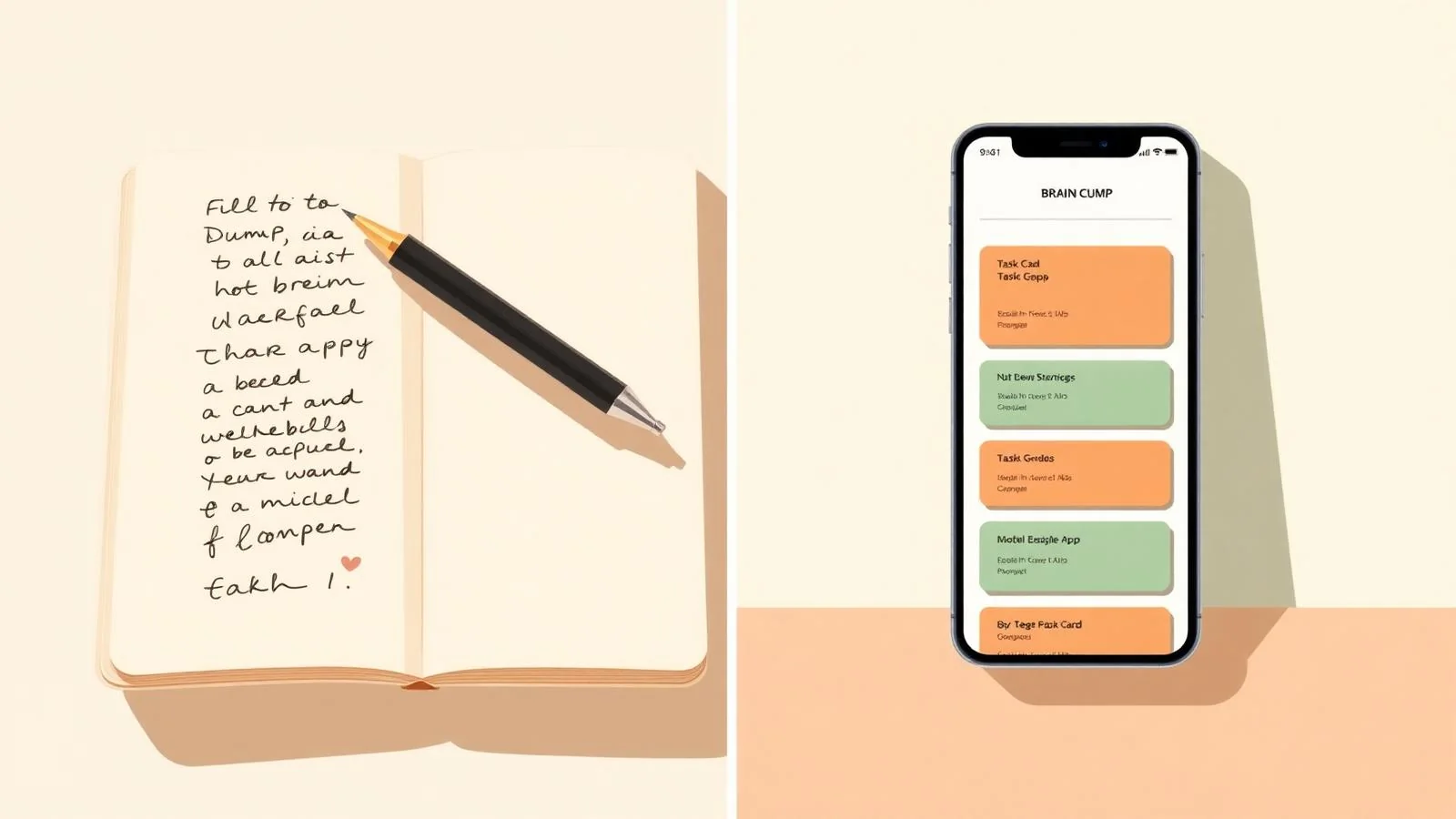
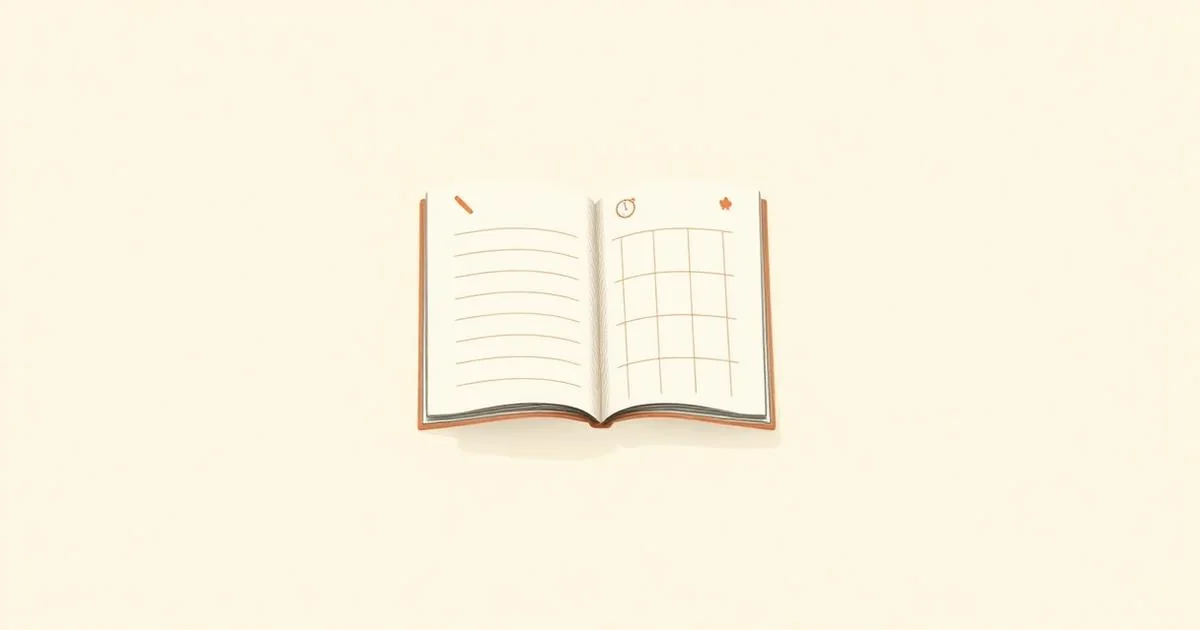
Journaling is a reflective practice. You sit down, look inward, and write about your thoughts, feelings, and experiences. The goal is self-awareness, emotional processing, and long-term insight. Research from the University of Rochester Medical Center has found that regular journaling helps manage anxiety, reduce stress, and cope with depression by helping you prioritize problems and identify triggers.
Good journaling is exploratory. You do not know what you will write before you start. You follow threads. You notice patterns. You sometimes surprise yourself with what comes out. The value is in the process, not the output.
This makes journaling excellent for emotional health, self-discovery, and long-term growth. But it is not designed to solve the problem of "I have too much to do and I cannot think straight."
What brain dumping is for
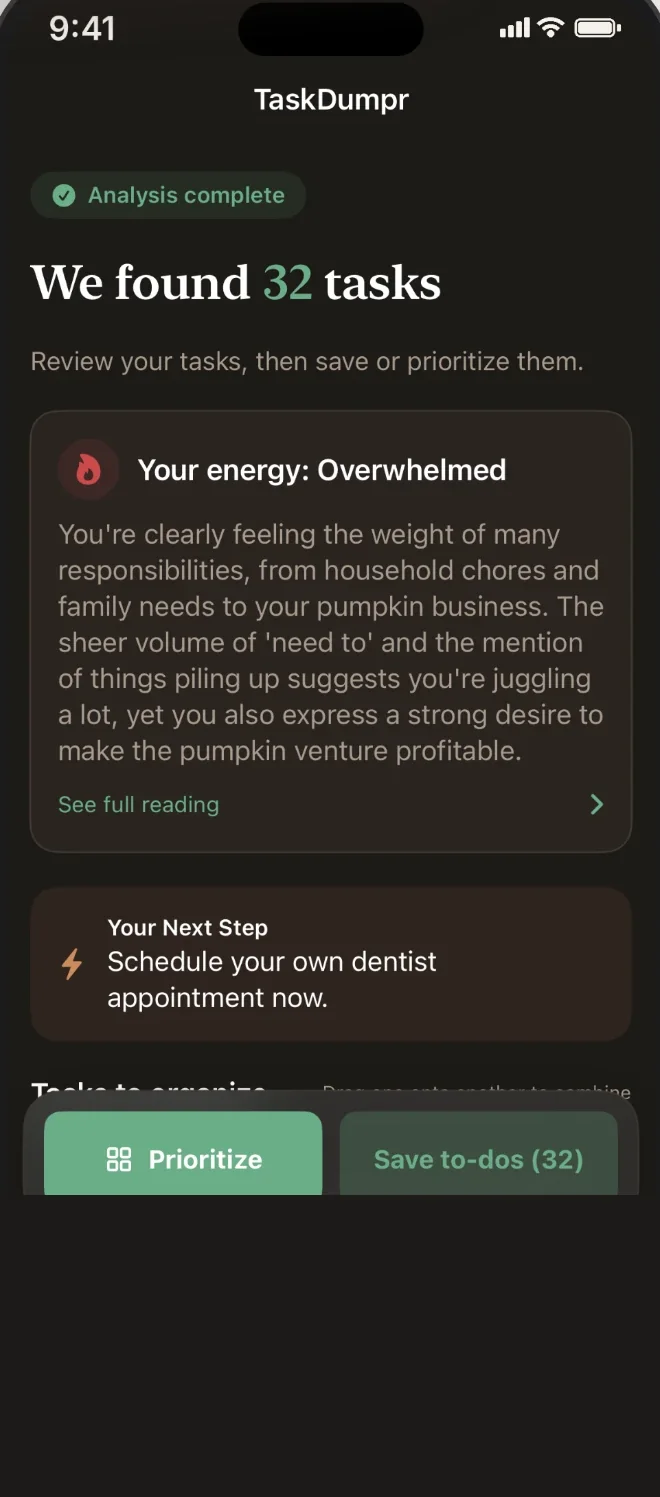
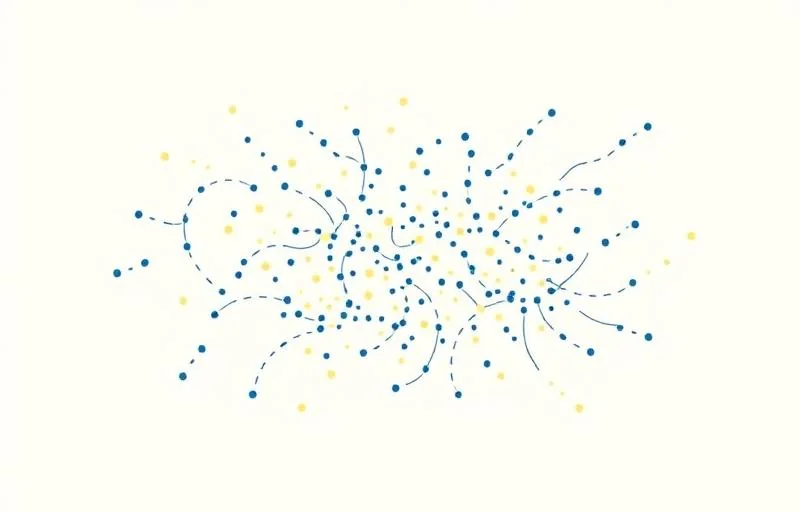
Brain dumping is an extractive practice. You sit down, open the floodgates, and write down every single thing in your head: tasks, worries, ideas, obligations, half-remembered commitments, random thoughts. All of it. The goal is not reflection. It is relief. If you are new to the concept, our complete guide to brain dumping walks through the full process.
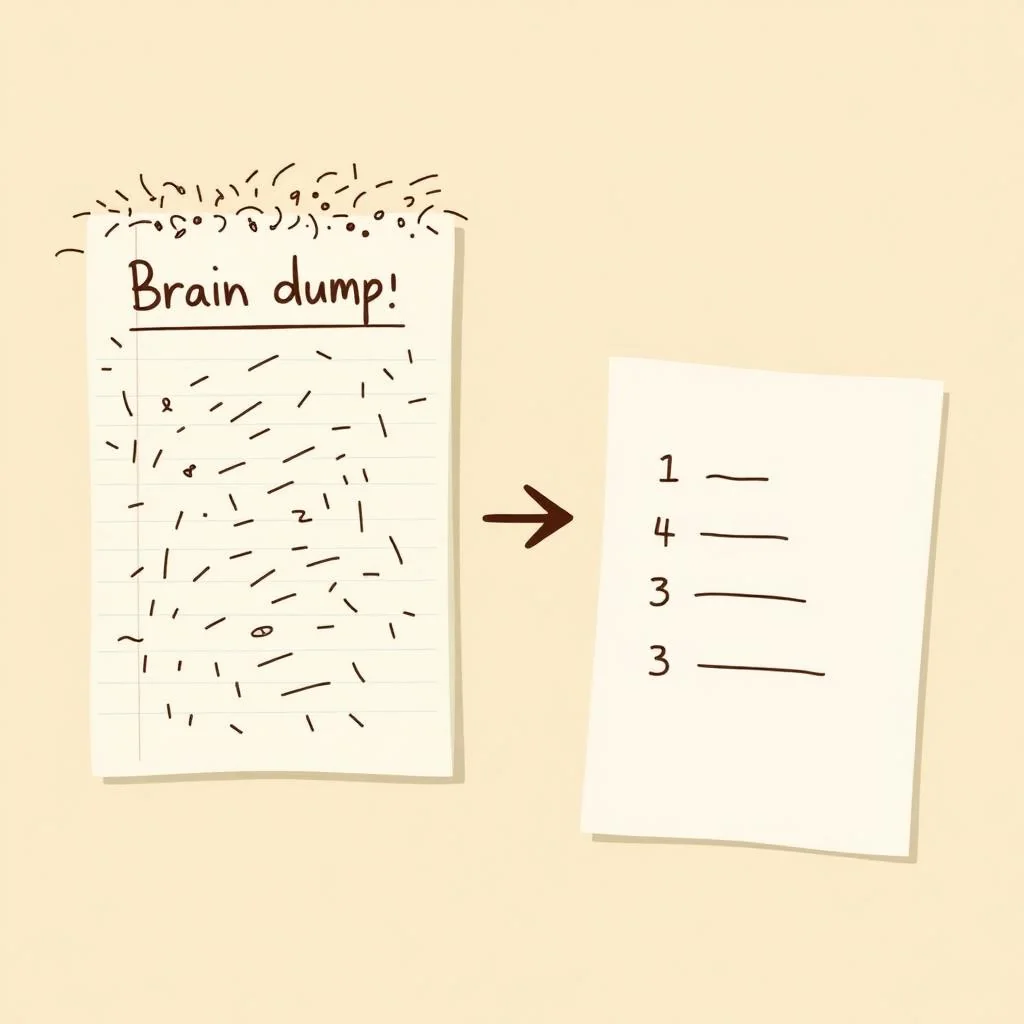
The difference is in what happens next. A journal entry is complete when you finish writing. A brain dump is just getting started. Once everything is out, you sort it. What is actionable? What is urgent? What can be delegated? What should be eliminated entirely?
This is why brain dumping produces immediate, tangible results. You go from "I cannot think straight" to "here are my 12 tasks, sorted by priority" in under 15 minutes. Journaling rarely produces that kind of operational clarity.
See the difference for yourself
Try a brain dump right now. Get everything out of your head and watch it turn into an organized action plan in minutes.
Start your brain dumpThe science behind each approach
Journaling works through what psychologists call "affect labeling." A 2007 study from UCLA found that putting feelings into words reduces activity in the amygdala, the brain's emotional alarm system. The simple act of naming an emotion helps regulate it. This is why journaling helps with anxiety and emotional overwhelm.
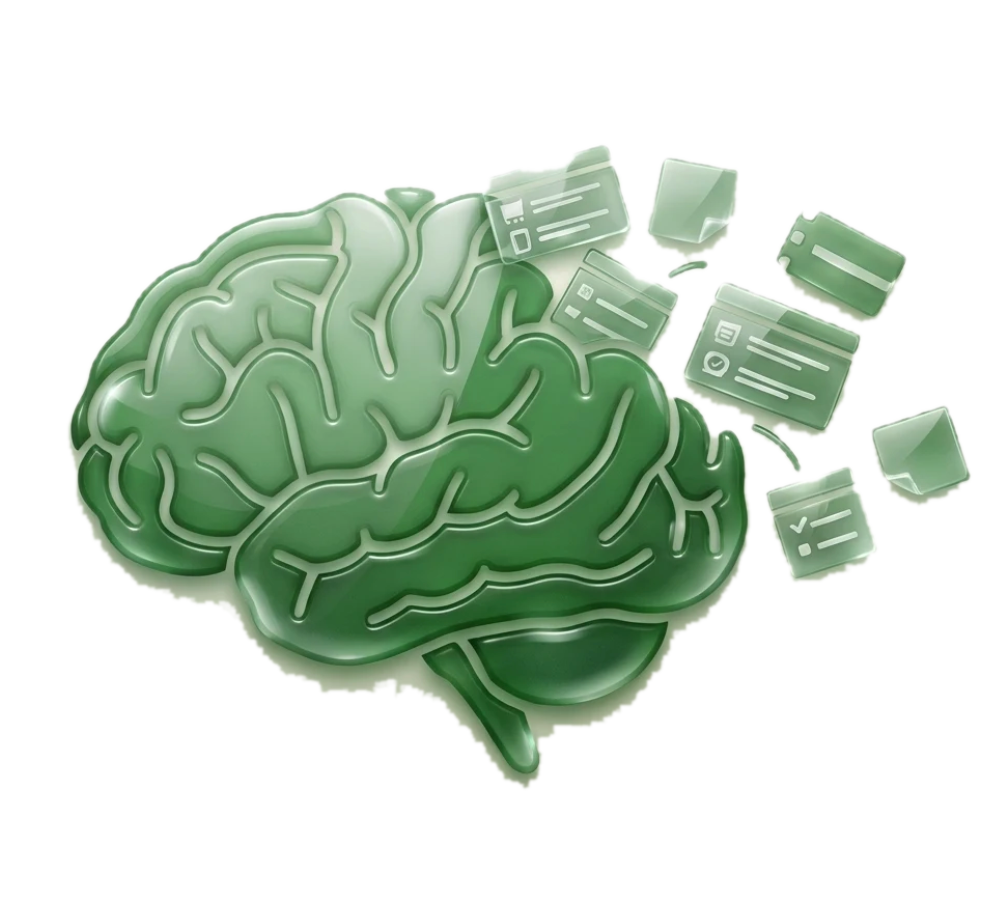
Brain dumping works through a different mechanism: cognitive offloading. The Zeigarnik effect, established by psychologist Bluma Zeigarnik in the 1920s, shows that your brain keeps unfinished tasks in active working memory, cycling back to them involuntarily. Writing them down closes the loop. Your brain stops tracking because the information is stored somewhere safe.
Both are valid. Both are backed by research. But they target different problems. Journaling calms the emotional system. Brain dumping clears the cognitive system. If you are lying awake at night because your brain will not shut up, a brain dump will likely help more than a journal entry.
When journaling backfires
Journaling is not always helpful. For some people, unstructured writing about feelings can turn into rumination rather than relief. If you sit down to journal and end up spiraling into the same worries you started with, you are not processing. You are rehearsing.
This is especially common when the source of your distress is practical rather than emotional. If you feel overwhelmed because you have too much to do, writing about how overwhelmed you feel does not reduce the number of things you have to do. It just adds "write in journal" to the list.
Brain dumping sidesteps this trap because it is action-oriented by design. You are not exploring your feelings about the to-do list. You are emptying the to-do list out of your head so you can actually see it and deal with it.
When brain dumping is not enough
Brain dumping is powerful, but it has limits. It does not help you understand why you keep overcommitting. It does not help you process grief, relationship conflict, or identity questions. It does not replace therapy.
If you do a brain dump and everything on the list is emotional rather than actionable, that is a signal. Your brain is not overloaded with tasks. It is overloaded with unprocessed feelings. In that case, journaling, therapy, or a conversation with someone you trust is the right move.
As we explored in why productivity apps are broken, the most effective approach treats you as a whole person, not just a task-completion machine. Sometimes you need to sort your tasks. Sometimes you need to sit with your feelings. The skill is knowing which one you need right now.
Using both together
The most effective approach is not choosing one over the other. It is knowing when to use each. Here is a simple framework:
- Feeling scattered or overwhelmed:Brain dump first. Get everything out, sort it, make a plan. You can journal about how you feel afterward if you want, but clear the cognitive backlog first.
- Feeling stuck or emotionally heavy:Journal first. Explore what is going on beneath the surface. Once you have some clarity on the emotional layer, brain dump any actionable items that emerged.
- Regular maintenance:Weekly brain dumps to keep your task load manageable. Occasional journaling to check in with yourself. Neither needs to take more than 10 minutes.
If you have ADHD, the combination is especially powerful. Brain dumping for ADHD covers specific techniques for minds that process differently, and pairing those with reflective journaling can help you build self-awareness about your patterns.
The bottom line
Journaling helps you understand yourself. Brain dumping helps you get unstuck. One is a mirror. The other is a release valve. Both are useful. Neither replaces the other.
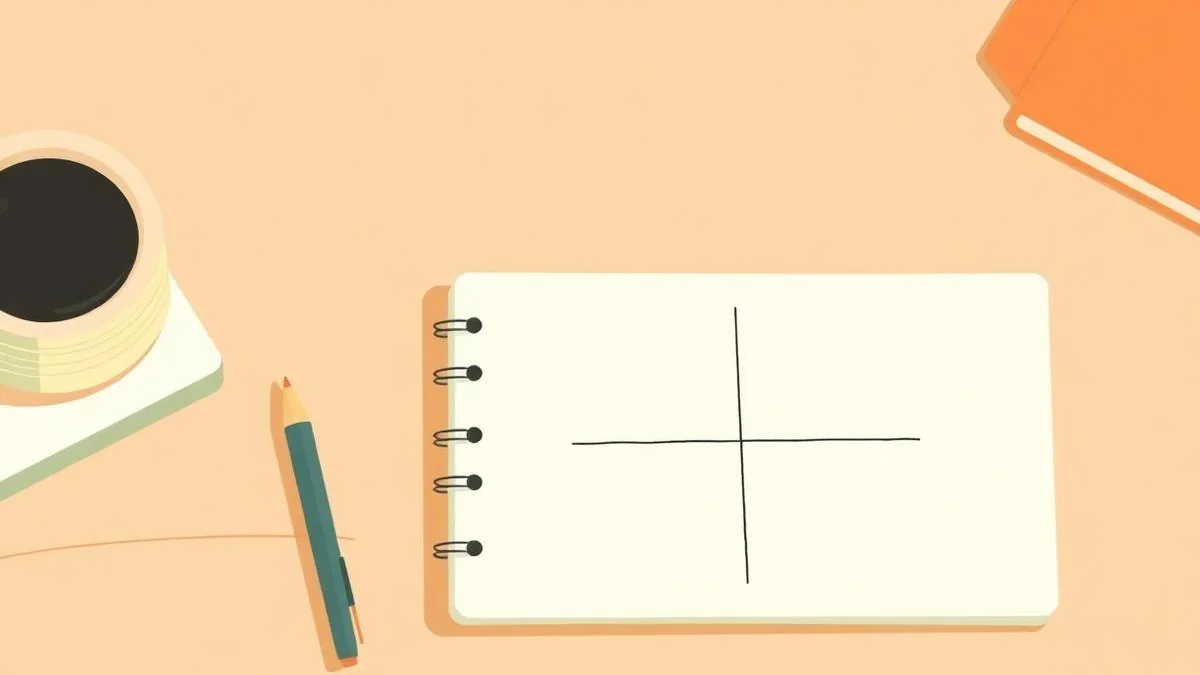
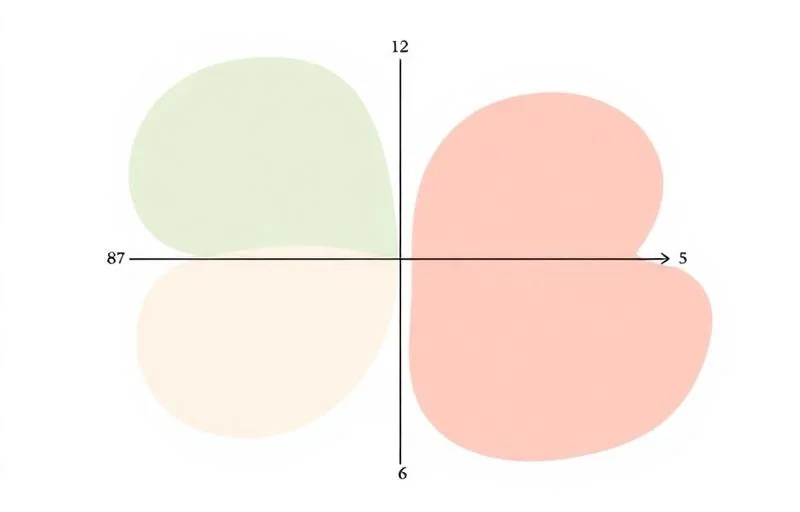
If you have been journaling faithfully but still feel overwhelmed by your to-do list, you do not need to journal harder. You need to brain dump. Get the tasks out, sort them with something like the Eisenhower Matrix, and let go of what does not serve you.
Your journal is for understanding your life. A brain dump is for running it.
Try TaskDumpr free
Empty your head in one go and let TaskDumpr split it into sorted, prioritized tasks. No card needed.
Start a free brain dump