
You have had the same thought circling in your head for three days. Maybe it is a task you need to do, a conversation you need to have, or a decision you keep putting off. You have thought about it dozens of times. But you have not written it down. And until you do, it will keep coming back.
This is not a willpower problem. It is a design feature of your brain. And once you understand why writing things down works so differently from thinking about them, you will never try to keep everything in your head again.
Already write things down on paper?
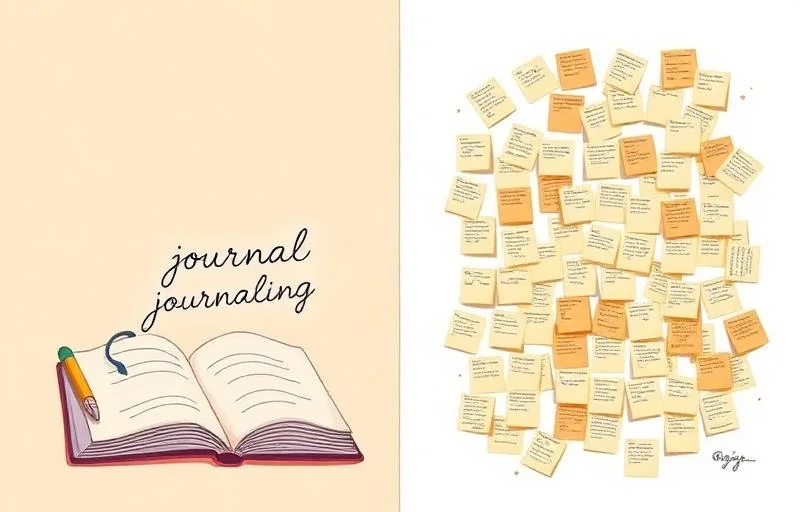
Snap a photo of your handwritten notes, journal entries, or sticky notes. TaskDumpr will extract the text and turn it into a prioritized action plan using the Eisenhower Matrix. Your analog habit, supercharged with AI.
Try photo importYour brain is not a storage device
Working memory, the part of your brain that holds information you are actively using, has severe limits. Cognitive psychologist George Miller's classic research established that we can hold roughly 7 items (plus or minus 2) in short-term memory, but more recent studies from the University of Missouri suggest the true number for working memory is closer to 3 or 4.
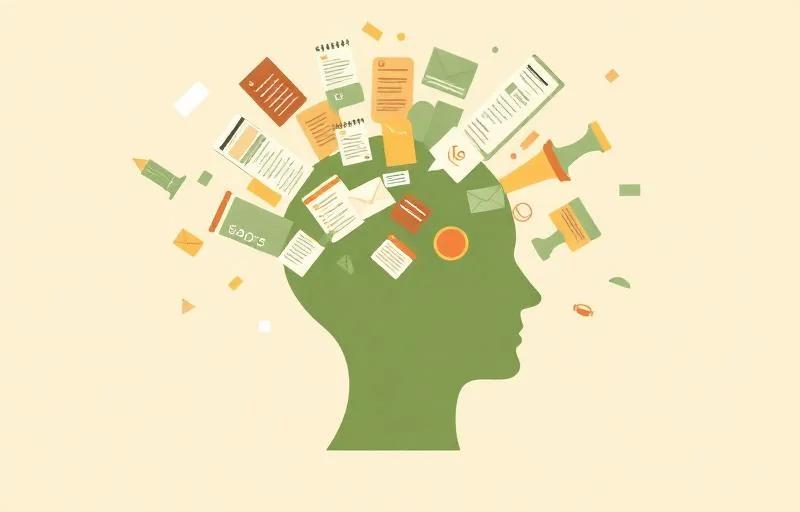
That means your brain can juggle about four things at once. Not forty. Not fourteen. Four. Every task, worry, and half-formed idea you try to hold mentally competes for those limited slots. When the slots are full, everything feels harder: decisions feel paralyzing, focus becomes impossible, and you start forgetting things that should be easy to remember.
This is why the mental load is so exhausting even when none of the individual items are difficult. The strain is not in the complexity of any single thought. It is in the volume of thoughts competing for limited cognitive space.
The Zeigarnik effect: why unfinished thoughts haunt you
In the 1920s, Russian psychologist Bluma Zeigarnik noticed something peculiar: waiters could remember complex, unpaid orders perfectly but forgot them completely once the bill was settled. Her subsequent research established what is now called the Zeigarnik effect: your brain treats incomplete tasks as open loops that demand continued attention.
Every unwritten thought is an open loop. Your brain keeps it in active rotation, revisiting it involuntarily, because from your cognitive system's perspective, it is still unresolved. This is why you remember that you need to call the dentist while you are in the shower, during a meeting, and at 2 AM, but somehow not when you are actually near a phone.
The breakthrough came from researchers at Wake Forest University in 2011. They found that simply making a concrete plan for a task (writing down what you will do and when) was enough to close the loop. The brain stopped cycling. Not because the task was done, but because the plan was stored externally. The loop could close.
Close the open loops right now
Get everything out of your head in under 10 minutes. Our AI sorts it into a clear action plan so your brain can finally stop cycling.
Start your brain dumpCognitive offloading: your brain's external hard drive
Neuroscientists use the term "cognitive offloading" to describe what happens when you externalize information: writing it down, saying it out loud, or storing it in a device. A 2015 study in Psychological Science found that saving information somewhere reliable helped people remember new information better, because their memory was no longer busy holding the old.
Read that again: writing things down makes you better at remembering the things you did not write down. Your brain reallocates the resources it was using to track the offloaded information. It is not laziness. It is optimization.
This is exactly why brain dumping produces such immediate relief. You are not organizing or planning. You are transferring information from a system with 4 slots (your working memory) to a system with unlimited capacity (paper or a screen). The cognitive tax drops instantly.
Why typing beats thinking (and sometimes handwriting wins)
The medium matters, but not in the way most productivity advice suggests. Research from Princeton and UCLA found that handwriting notes leads to deeper processing and better conceptual understanding compared to typing. But that advantage applies to learning, not to task management.
When your goal is not to learn but to unload, speed matters more than depth. You want the lowest possible friction between the thought in your head and its external form. For most people, that means typing, dictating, or using voice-to-text. The faster you can get it out, the faster your brain can let go.
What matters most is that the information lands somewhere you trust. If you write it on a random scrap of paper that you will lose, your brain knows it is not safe and keeps the loop open. The external system needs to be reliable enough that your cognitive system can genuinely release the item.
The sorting that happens after
Writing things down does more than just offload. It changes your relationship to the information. A thought in your head feels urgent, important, and permanent. The same thought on a list looks like one item among many, and often not nearly as significant as it felt internally.
This is where externalization becomes genuinely powerful. Once your thoughts are visible, you can sort them. The Eisenhower Matrix provides a simple framework: Is this urgent? Is this important? Those two questions, applied to a written list, will reveal that most of what is consuming your mental energy is neither. Some items can be deprioritized. Others can be let go entirely.
You cannot do this sorting in your head. Not because you lack the intelligence, but because your brain does not have enough working memory to hold all the items and evaluate them simultaneously. Externalization is not a shortcut. It is a prerequisite.
What happens when you do not write things down
The costs of keeping everything in your head are well documented. Other research links chronic cognitive overload to anxiety, insomnia, and burnout.
The most insidious cost is invisible: you lose creative capacity. Your brain cannot generate new ideas when every slot is occupied by maintenance tasks. The feeling of being "too busy to think" is literally true. Your thinking hardware is fully allocated to remembering and tracking. There is nothing left for insight, creativity, or strategic thought.
Writing things down is not about productivity. It is about recovering your ability to think clearly.
Start with one complete dump
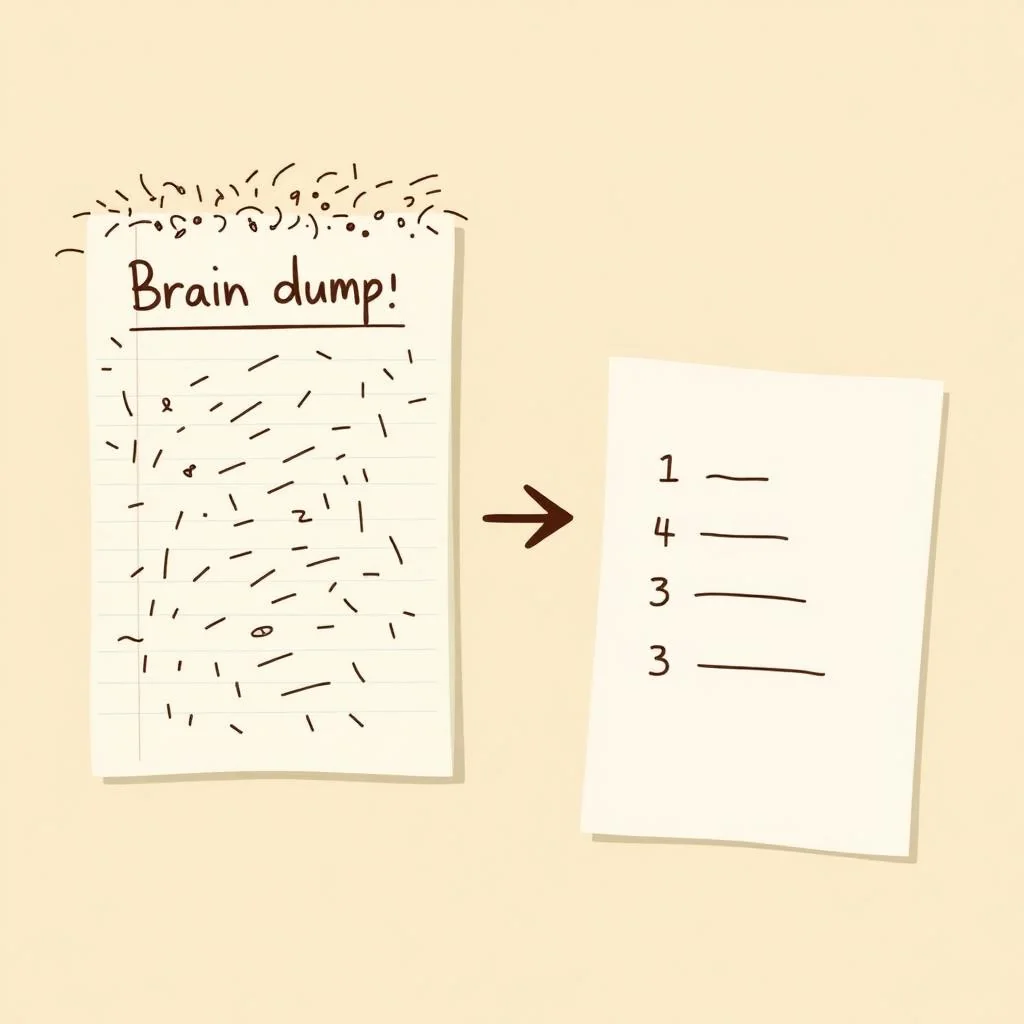
You do not need a new system, a new app, or a new habit. You need one honest externalization session. Sit down and write every single thing in your head: tasks, worries, ideas, obligations, things you keep meaning to do, things you feel guilty about not doing. Do not organize. Do not judge. Just get it out.
If you have ADHD, this process works especially well because it matches how your brain naturally processes information: in bursts, not linear sequences. Brain dumping for ADHD covers specific techniques for making it stick.
Most people are shocked by how long the list is. That is the point. You have been carrying all of that in a system designed for four items. Of course you feel overwhelmed. The surprise is not that you are struggling. The surprise is that you have been managing at all.
Your brain was built to have ideas, not to hold them. Write it down. Let your mind do what it does best.
Prefer pen and paper? We have got you covered.
If you just brain dumped in a notebook, do not retype it. Take a photo and let TaskDumpr extract the text, sort it into the Eisenhower Matrix, and give you a clear action plan. The best of analog and digital in one step.
Import a photo of your notesTry TaskDumpr free
Empty your head in one go and let TaskDumpr split it into sorted, prioritized tasks. No card needed.
Start a free brain dump