
Your brain is built for having ideas, not holding them. That is the core philosophy behind Getting Things Done (GTD), the productivity system David Allen has taught for over 40 years.
The problem GTD solves: working memory can only track about four things at once. Most professionals are juggling hundreds of open loops in their heads. Tasks, follow-ups, projects, half-decisions. The result is constant low-grade anxiety and scattered focus, no matter how hard you work.
The fix is an external brain. Here is how to build one, and how to prioritize what comes out of it using the Eisenhower Matrix.
What is the GTD method?
GTD moves every commitment out of your head and into a trusted system in three steps.
1. Capture
Write down everything that has your attention the moment it appears. No filtering, no organizing. Just extraction.
2. Clarify
Decide what each item actually means. If it is actionable, define the next physical action. Not "website" but "email developer about broken checkout page." If it is not actionable, it is reference, trash, or someday-maybe.
3. Organize
Route items into the right buckets: calendar for time-specific commitments, next-action lists for tasks, a projects list for anything needing multiple steps.
The result is what Allen calls "mind like water": full focus on the task in front of you because nothing unresolved is pulling at your attention. His central claim is that productivity is directly proportional to your ability to relax.
One credibility note worth knowing. Allen did not invent the foundational technique. He learned the mind sweep from his mentor Dean Acheson, a management consultant who found that executives could not focus on new goals while old unfinished business looped in their heads. Allen built the full system around that insight.
How to do a brain dump (the mind sweep)
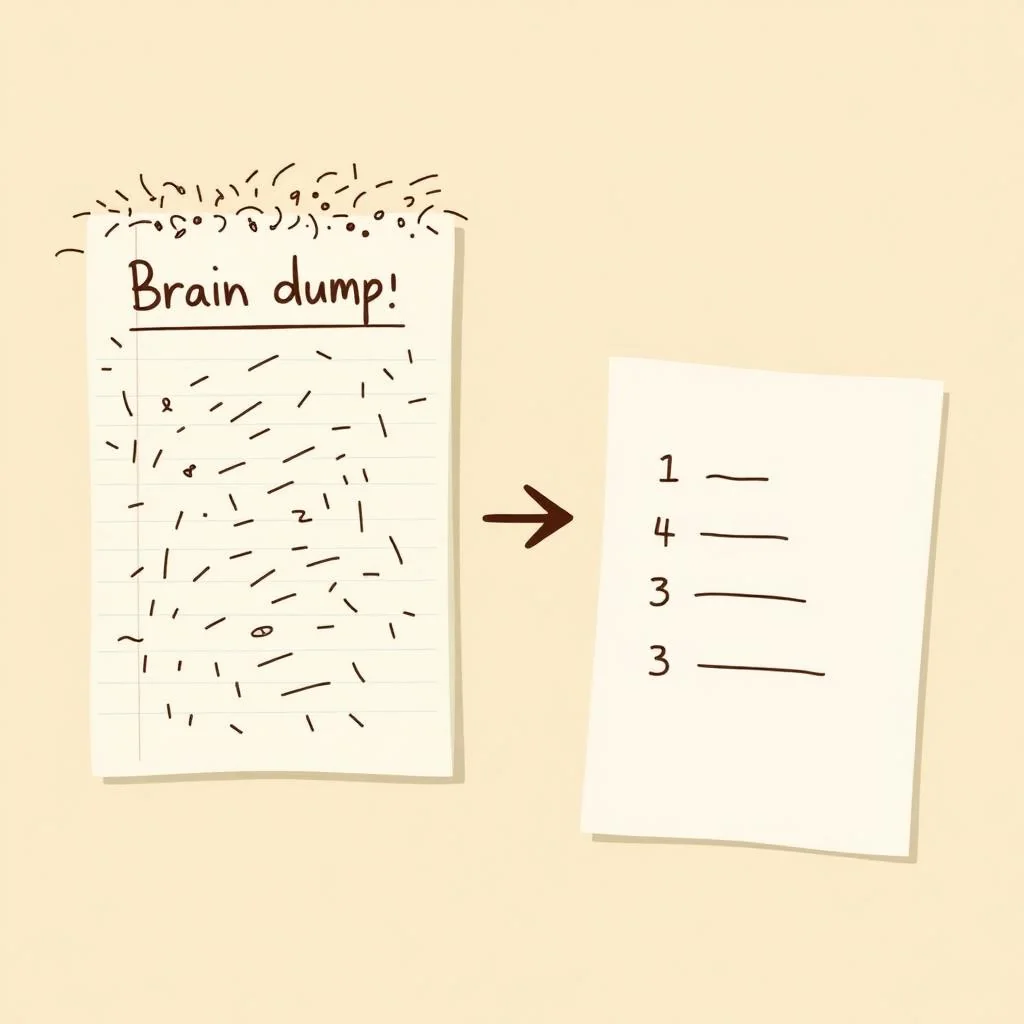
The mind sweep is GTD's starting point and the highest-leverage 15 minutes in productivity.
- Set a timer for 15 minutes.
- Write every open loop, one item per line: work, personal, financial, trivial.
- Do not sort, do not judge, do not solve.
- When the flow slows, ask what you have been avoiding. That is where the heavy items hide.
Speed matters here. If capture has friction, you will skip it. A dedicated tool like TaskDumpr is built for exactly this: dump now, organize later. If you want the longer version of this step, read how to do a brain dump in five steps or work through a trigger list of 100+ prompts.
The problem: capture without prioritization
Here is where most systems die. People capture everything, then never process it. Notes apps become what one commentator called "write-only": stuff goes in, nothing comes out.
A brain dump without a decision process is just a junk drawer with a search bar. You need a sorting mechanism. That is the Eisenhower Matrix. It is the same reason a brain dump and a to-do list are not the same thing.
What is the Eisenhower Matrix?
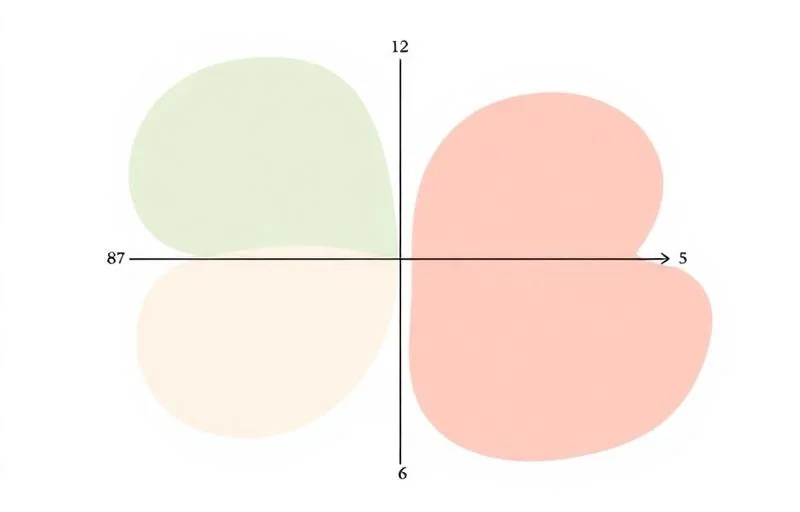
The Eisenhower Matrix sorts every task by two factors, urgency and importance, into four quadrants.
Do
Urgent and important. Deadlines, crises, real fires. Handle these now.
Schedule
Important but not urgent. Deep work, strategy, health, relationships. Give these a specific calendar slot, because "later" is where important work dies.
Delegate
Urgent but not important. It must happen, but not through you. Hand it off or automate it.
Eliminate
Neither urgent nor important. Busywork and guilt tasks. Delete without apology.
The matrix works because it forces a verdict. Every item gets one of four fates. Nothing sits in limbo. For a deeper walkthrough, see the practical guide to the Eisenhower Matrix.
GTD plus Eisenhower: the complete workflow
Neither framework is complete alone. The Eisenhower Matrix assumes you can see all your tasks, but you cannot prioritize what you have not captured. GTD captures everything, but leaves you with a long list and no ranking.
Combined, they cover each other's blind spot.
- Sweep. A 15-minute brain dump. Everything out of your head into one place.
- Clarify. Define the next physical action for every actionable item.
- Sort. Run each action through the matrix: do, schedule, delegate, or eliminate. Expect a surprising amount to land in eliminate. Much of your mental load was never worth carrying.
- Review weekly. Your brain reconstructs context from roughly the past seven days, then details fade. One hour, same day each week: re-sweep, re-clarify, re-sort. Here is a 10-minute weekly reset if an hour feels like too much to start.
The real skill is deciding
Most productivity advice sells doing more. GTD and the Eisenhower Matrix point somewhere else: the actual work is deciding. What done looks like. What the next action is. What gets eliminated without guilt.
As Allen puts it, you can only feel good about what you are not doing when you know what you are not doing.
Start tonight. One 15-minute sweep, four verdicts. If you want a dedicated home for the dump, TaskDumpr is free and takes ten seconds to start.
If GTD feels like too many steps, the Eisenhower Matrix is a lighter way to decide what to do first.
Do a free brain dump now and let the matrix decide the rest. Clear head. Decided list. That is the whole game.
Try TaskDumpr free
Empty your head in one go and let TaskDumpr split it into sorted, prioritized tasks. No card needed.
Start a free brain dump