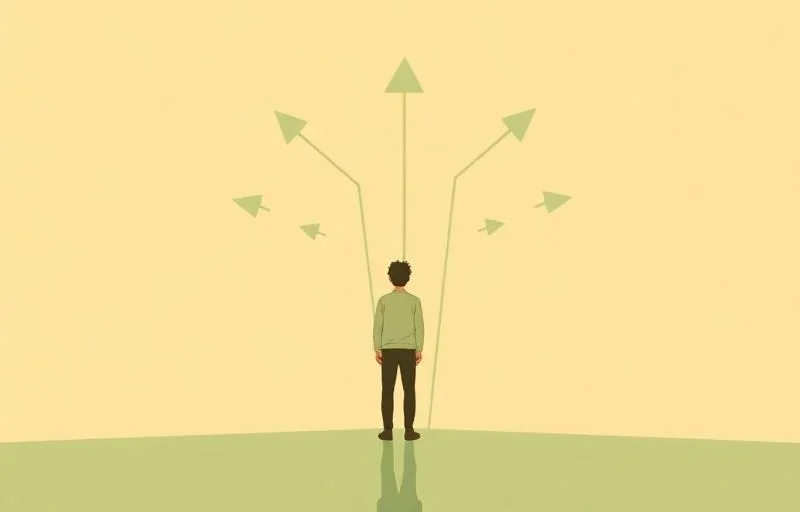

There is a specific kind of tired that shows up around 7pm. You are too tired after work to do anything, yet you are not actually sleepy. You could stand up. But every decision feels like lifting furniture: what to eat, whether to go for the run, which of the three things you meant to do tonight to start first. So you do the one thing that requires no decisions at all. You keep holding your phone.
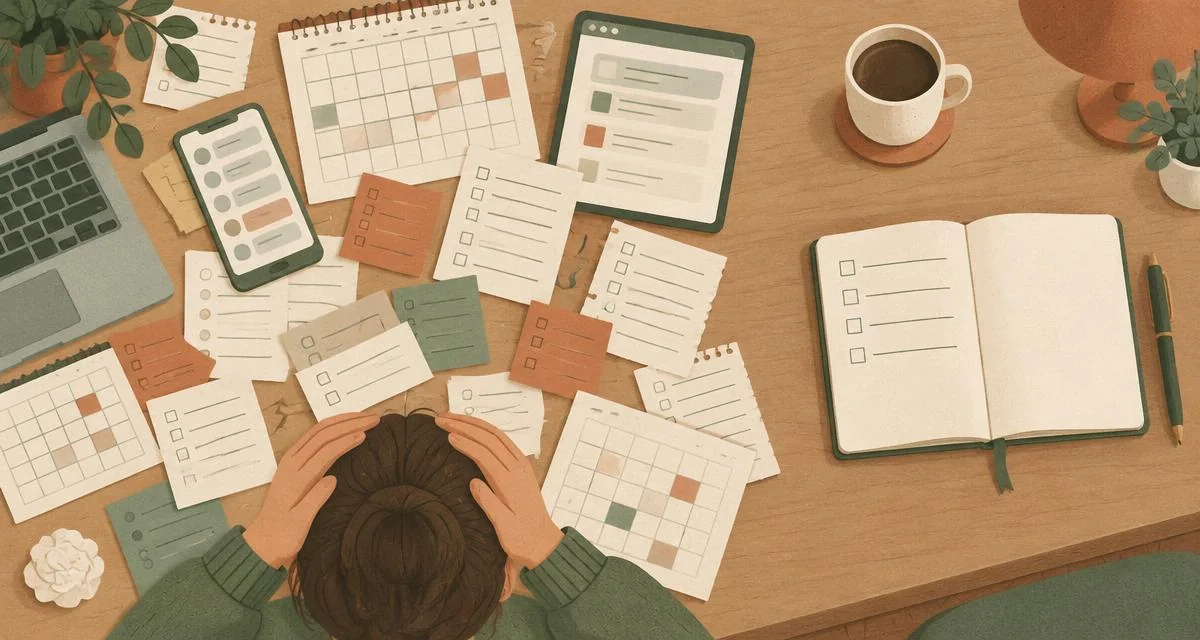
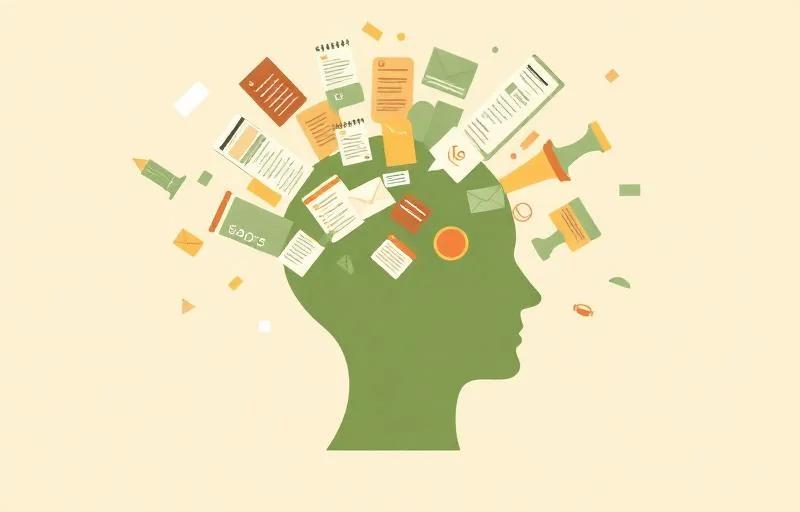
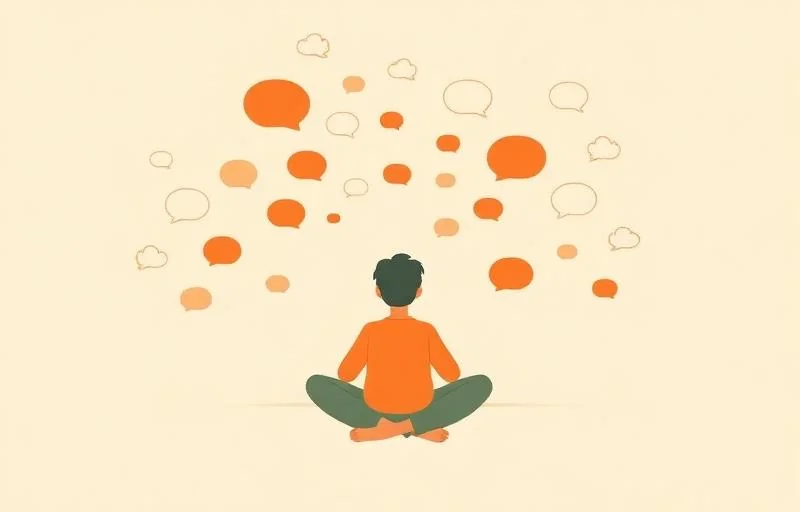
Meanwhile, your brain is doing something that feels like nothing but is not. It is circling. Reply to the landlord. The renewal is due Thursday. You never followed up on that intro. Nothing gets done, and none of it gets put down.
By bedtime, most people reach the same conclusion: I have no discipline. There is a better explanation, and it comes from a brain scanner, not a self-help book.
Why you are mentally exhausted after work
When your phone drops to a few percent battery, it does not shut off. It quietly stops doing the expensive things first. Background refresh stops, the screen dims, and the nonessential features go dark.
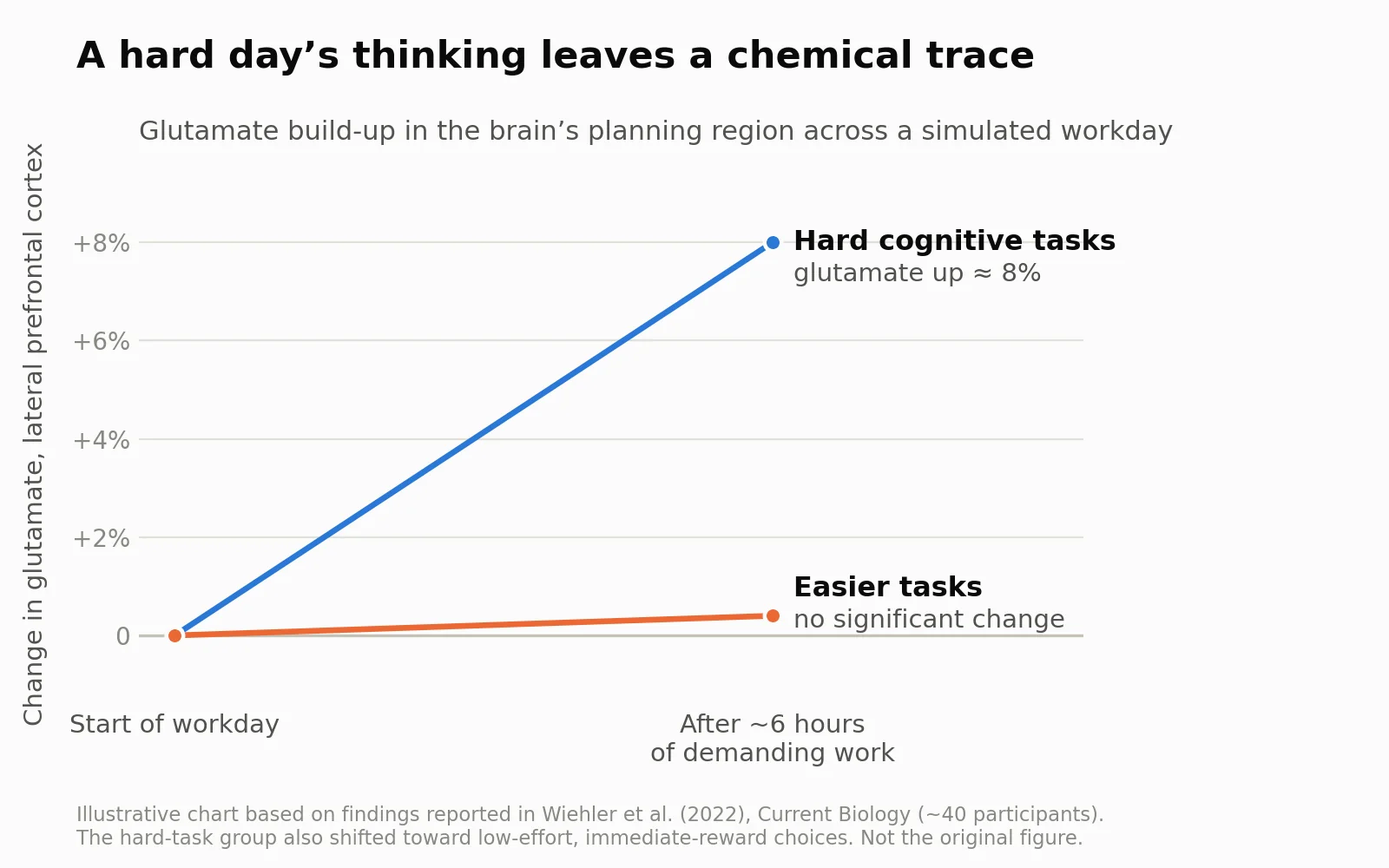
Your brain seems to do something similar after a demanding day. In 2022, researchers at the Paris Brain Institute put people through a simulated workday of just over six hours, with one group given much harder cognitive tasks than the other. By the end of the day, the hard-work group showed a buildup of glutamate, a chemical neurons use to signal each other, in the lateral prefrontal cortex. That region helps with planning, judgment, and self-control. The same group had also started choosing smaller, immediate rewards over larger ones that required effort or waiting.
In other words, the first feature to switch off in low-power mode may be the one that picks the harder, better option. The couch is not a moral choice. It is simply the option that costs the least to pick.
This also answers a question people ask a lot: why am I so tired after work when I sit all day? Because this kind of tiredness is not necessarily physical. Your legs may be fine while the part of your brain that makes decisions has been working for eight hours straight.
A fair caveat: this was a single study of roughly forty people, and researchers still debate exactly how glutamate relates to fatigue. It is useful evidence, not the final word. But it matches what many people feel at the end of a heavy day.
I first came across this study in a thread by Dr Dominic Ng (@drdominicng), a doctor and neuroscientist who writes a weekly newsletter on the brain science of everyday life. His explanation of the research, and his argument that willpower is a biological function rather than a personality trait, is worth reading in full.
Why scrolling is not rest
Here is the part that makes evenings worse than they need to be. Scrolling feels passive, but your brain is not idle. A feed is a steady stream of small decisions: keep watching or skip, reply or ignore, one more or stop.
On top of that, the circling list is still running. Every unfinished task you are trying not to forget is something your brain is actively holding, like keeping a phone number in your head until you can write it down. Psychologists often call these open loops, and holding them takes effort even when you are doing nothing else.
So the evening slump has two drains running at once: the fatigue from the day, and the loops you carried home. The first one clears with real rest. The second does not clear on its own at all.
Step one: brain dump the open loops
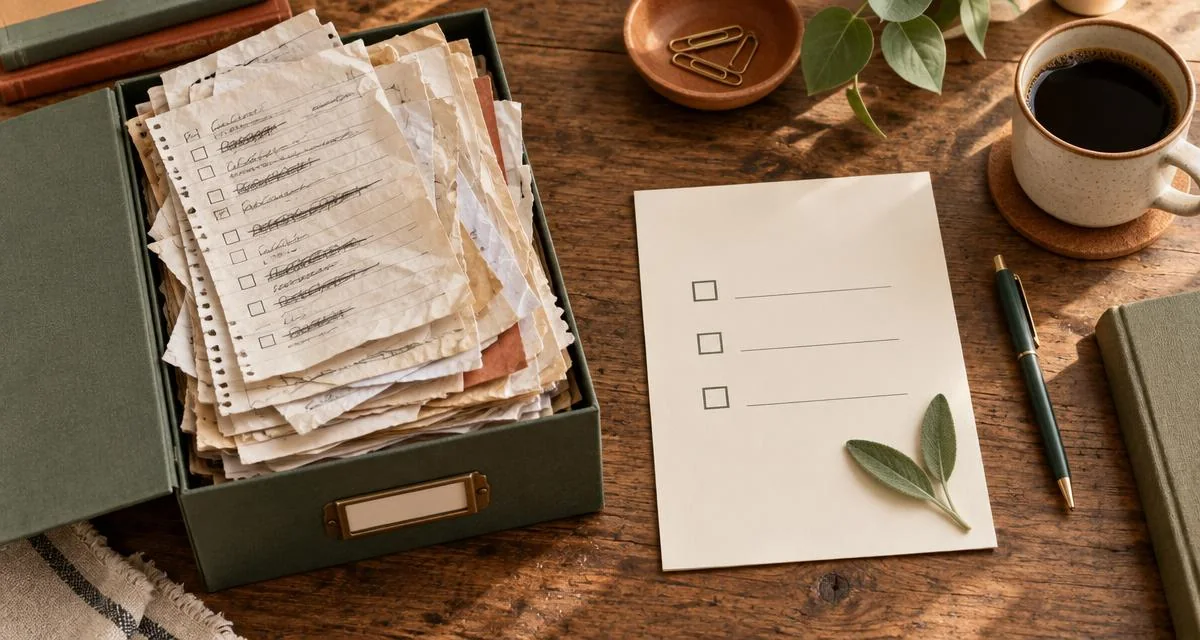
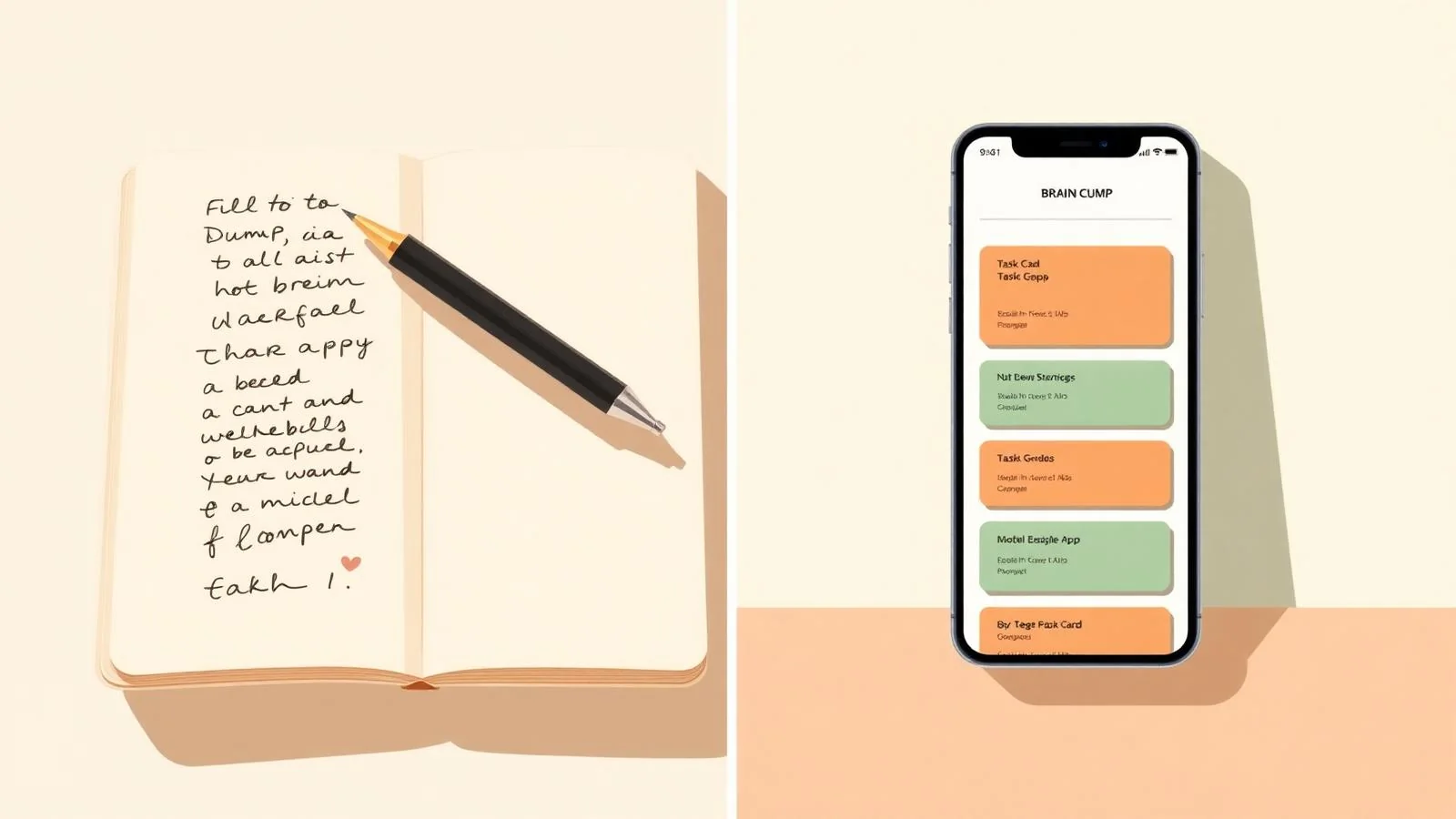
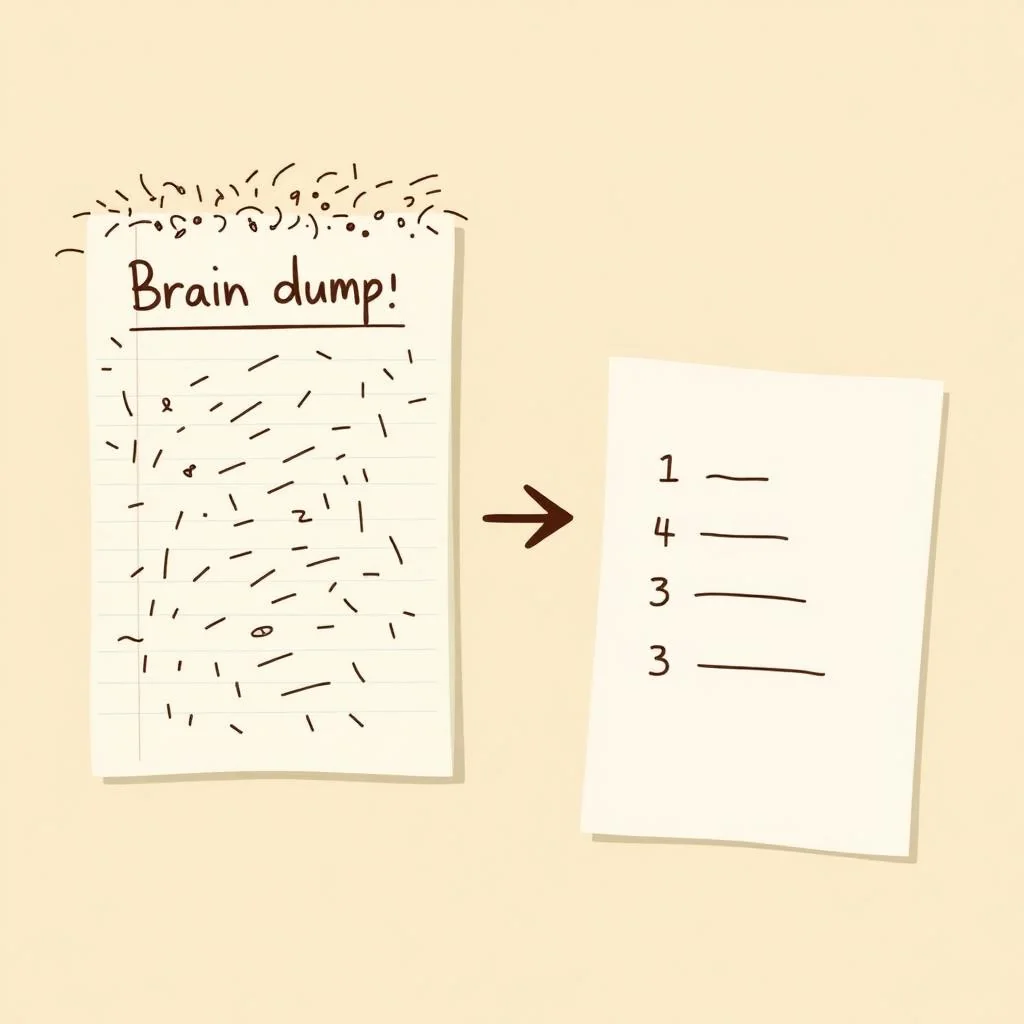
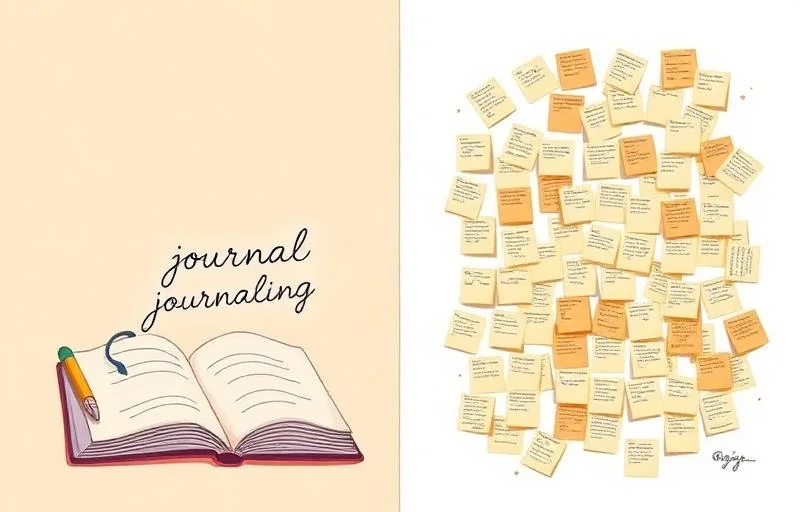
This is what a brain dump is for. Before you try to rest, spend three minutes getting everything that is circling out of your head: the landlord, the renewal, the intro, the thing you remembered on the drive home. Type it or say it, in whatever order it comes out. If you have never done one, our guide on how to do a brain dump walks through it.
Then stop there. Do not prioritize, do not plan tomorrow, and do not color-code anything. Sorting is decision-making, and you have no decisions left to spend tonight.
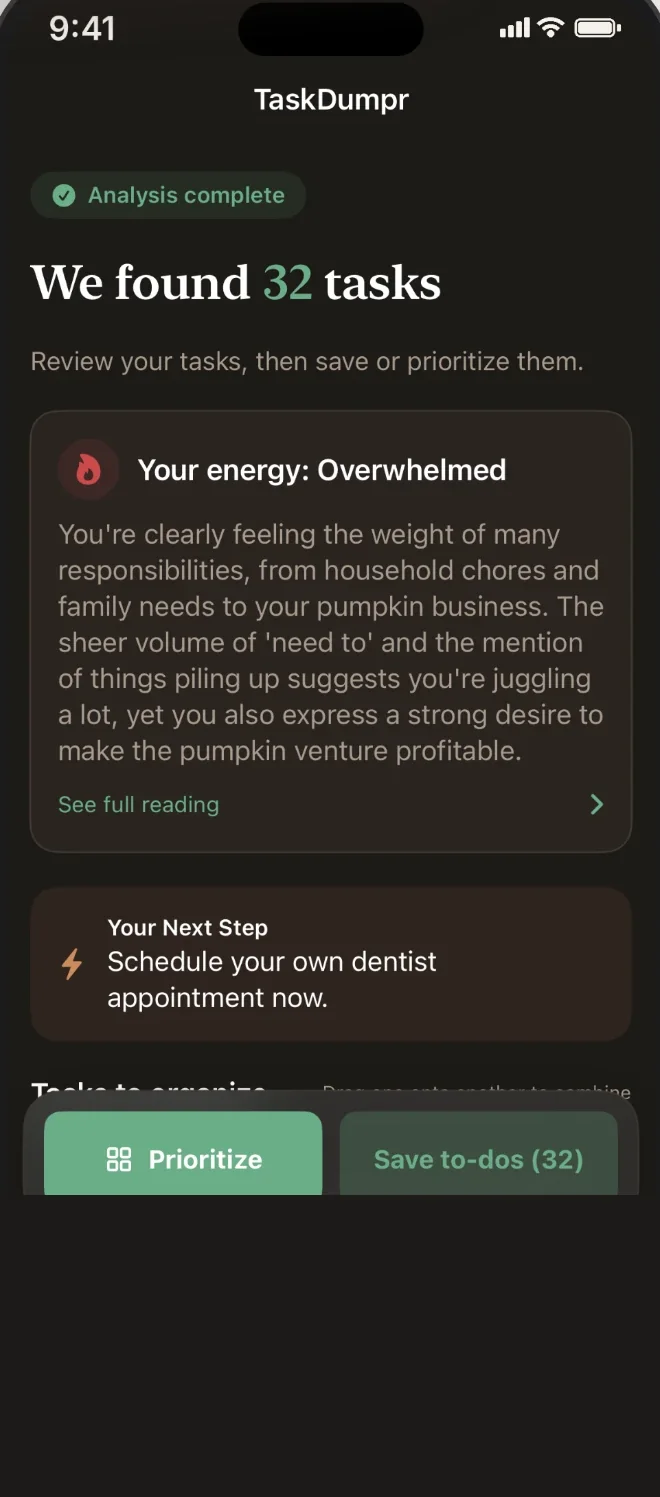
This is the job TaskDumpr was built for. You type or talk out the mess, and it splits everything into individual tasks and sorts them by urgency for you. The decisions still get made, just not by the part of you that is already running on empty. Tomorrow morning you open a sorted list instead of a blank page.
The point is not to squeeze more productivity out of your evening. The point is that your brain can finally stop guarding the list.
Step two: rest that asks nothing of you
Once the loops are out, give your planning brain as little to do as possible for half an hour. Anything with no real choices in it works:
- A long shower
- Washing the dishes by hand
- Walking a route you have walked a hundred times
- Stretching on the floor
- Folding laundry
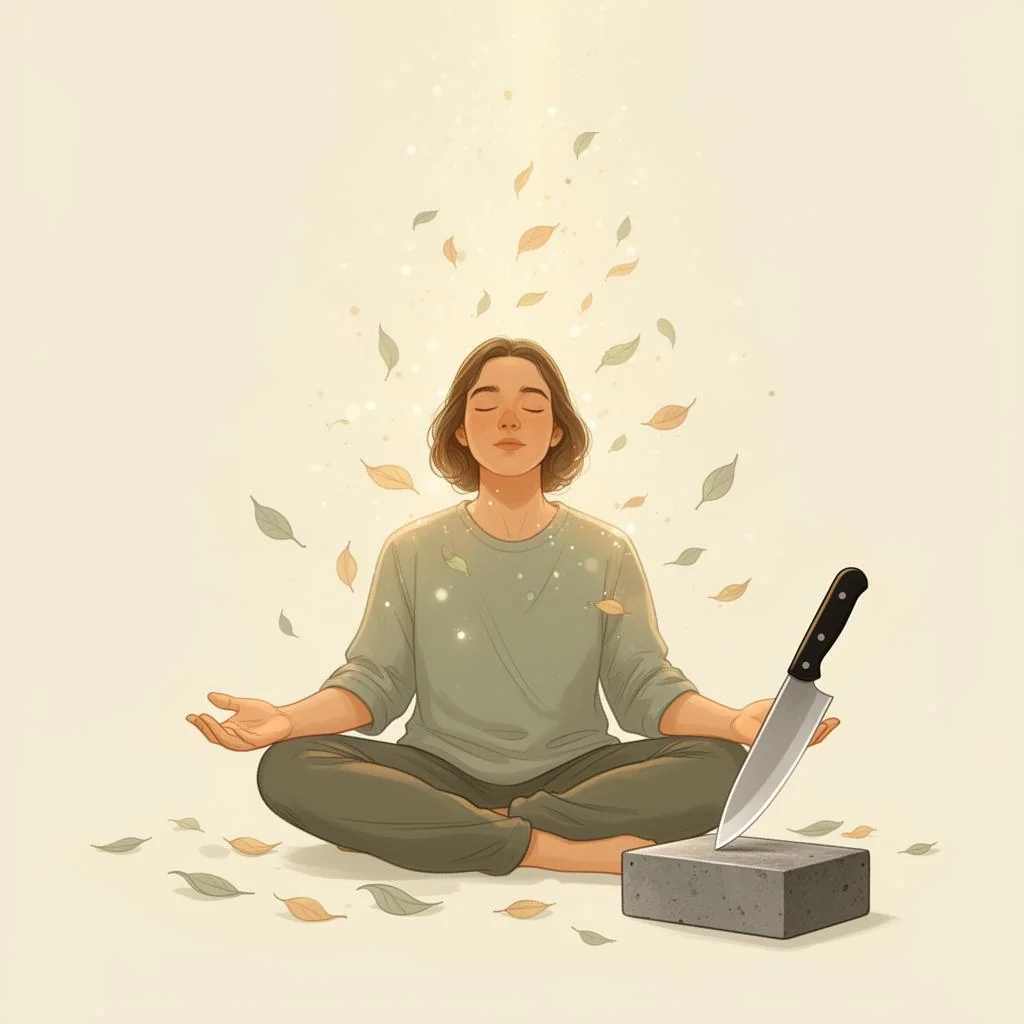
Your hands can be busy. Your judgment should be off duty.
Some nights, that half hour is enough for the run or the book to feel possible again. Some nights it is not, and that is fine too. Real recovery from mental exhaustion after work is not about earning a productive evening. It is about not spending the evening depleted and anxious at the same time.
Stop feeling guilty for doing nothing after work
The last thing to put down is the story you tell yourself about all of this. “I wasted another evening.” “Other people manage.” “Something is wrong with me.”
That story is not harmless background noise. Replaying it is one more demanding task handed to an already depleted brain, and the guilt follows you into the next evening. We wrote more about this pattern in productivity guilt: the sense of falling short of a standard you never actually agreed to.
You did not fail a test of willpower. You reached a real cognitive limit. The evenings you spent on the couch were not evidence of a character flaw. They were your brain asking for less.
If the guilt is loud tonight, write it into Let Go and release it. It is not a task, and it does not need a plan. It only needs somewhere to go that is not your head.
The 10-minute evening reset
- Dump, 3 minutes. Get every open loop out of your head. No sorting.
- Release, 2 minutes. Put the guilt and the “shoulds” into Let Go.
- Settle, 5 minutes. Begin something familiar that asks for no decisions, then keep going if it feels restorative.
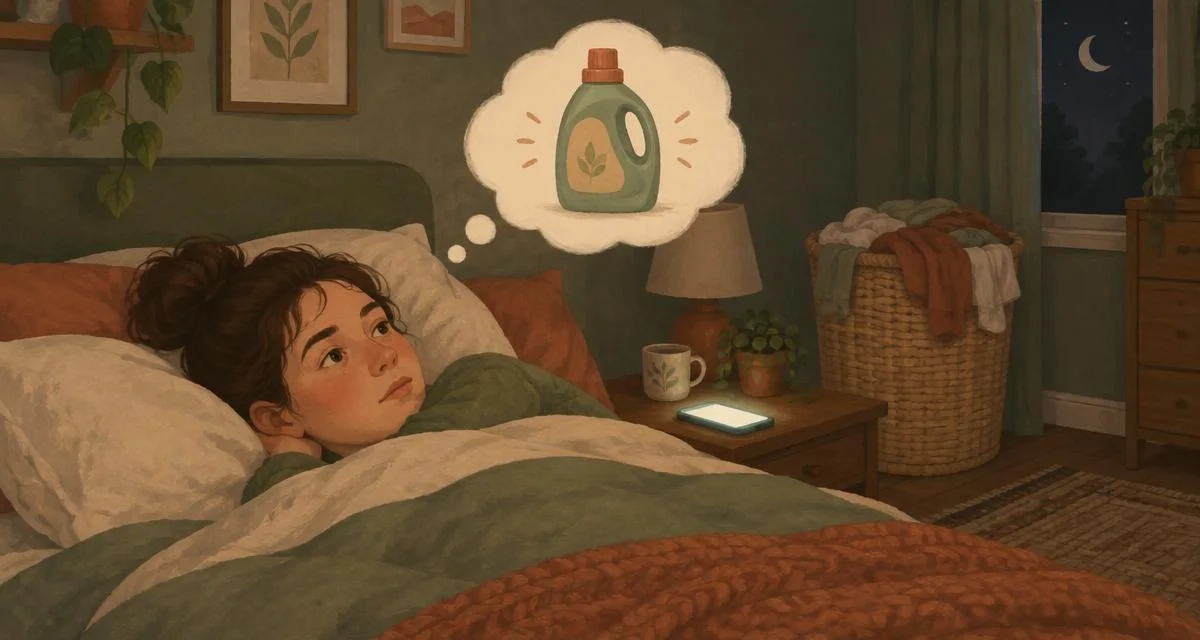
Then let the evening be whatever it turns out to be, without the verdict attached. If your loops tend to show up at bedtime instead, a brain dump before sleep works the same way.
Frequently asked questions
Why am I so tired after work if I sit all day?
Mental work tires you differently from physical work. A day of decisions, focus, and self-control can leave your body feeling fine while your ability to make effortful choices runs low.
How do I recover from mental exhaustion after work?
First, get unfinished tasks out of your head with a quick brain dump. Then spend 20 to 30 minutes on something that needs almost no decisions, like a familiar walk, a shower, or chores on autopilot.
Is it bad to do nothing after work?
No. Low-demand time helps a tired brain recover. The problem is doing nothing while mentally rehearsing your list and criticizing yourself, which does not feel like real rest.
Why do I feel guilty relaxing in the evening?
You may be measuring your evening against a version of yourself with unlimited energy. Naming the guilt and deliberately setting it aside can stop it from running in the background.
Should I brain dump right after work or before bed?
Right after work is better if your evenings feel stuck. Before bed is better if your thoughts arrive when your head hits the pillow. Either way, dump without sorting and leave planning for the morning.
Sources
Keep reading
Try TaskDumpr free
Empty your head in one go and let TaskDumpr split it into sorted, prioritized tasks. No card needed.
Start a free brain dump