
You have fifteen things on your list. All of them feel like they need to happen today. The work deadline. The email you have been avoiding. The appointment you need to schedule. The thing your partner asked you to handle last week. Your brain is pinging between them so fast that you end up doing none of them.
This is not a time management problem. It is a perception problem. Your brain is treating everything as equally urgent, and that makes prioritization feel impossible. The good news: there is a well-researched reason this happens, and a straightforward way to fix it.
The simplest tool for this is the Eisenhower Matrix.
Why everything feels urgent (even when it is not)
In 2018, researchers at Johns Hopkins University published a study in the Journal of Consumer Research documenting what they called the "mere urgency effect." They found that people consistently prioritize tasks that feel time-sensitive over tasks that are objectively more important, even when the urgent task has a lower payoff.
The effect gets stronger under cognitive load. The more overwhelmed you are, the worse your brain becomes at distinguishing real urgency from emotional urgency. When you are carrying twenty open loops in your head, everything triggers the same "handle this NOW" alarm. Your brain defaults to urgency because urgency is easier to detect than importance.
This is why reading another article about time management rarely helps. The problem is not that you do not know how to prioritize. The problem is that your brain cannot prioritize while it is overloaded. You have to reduce the load first.
The difference between urgent and important
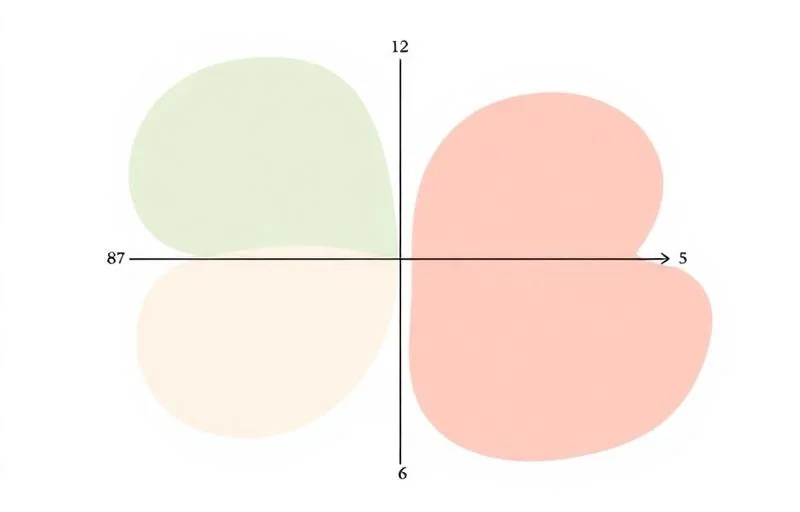
President Eisenhower reportedly said, "What is important is seldom urgent, and what is urgent is seldom important." Whether or not he actually said it, the principle is backed by decades of research. The Eisenhower Matrix formalizes this distinction into four quadrants:
- Urgent + Important:Genuine crises. The server is down. The deadline is today. Handle these immediately.
- Important + Not Urgent:Strategic work. Exercise. Relationship maintenance. Long-term projects. These move your life forward but never scream for attention.
- Urgent + Not Important:Interruptions. Most emails. Other people's emergencies. These feel pressing but do not actually matter for your goals.
- Not Urgent + Not Important:Time fillers. Mindless scrolling. Tasks you keep on the list out of guilt. These can be eliminated.
The insight is that most of what feels urgent falls into the third category. It demands your attention without deserving it. But you cannot see that when everything is swirling inside your head.
Stop guessing what is urgent
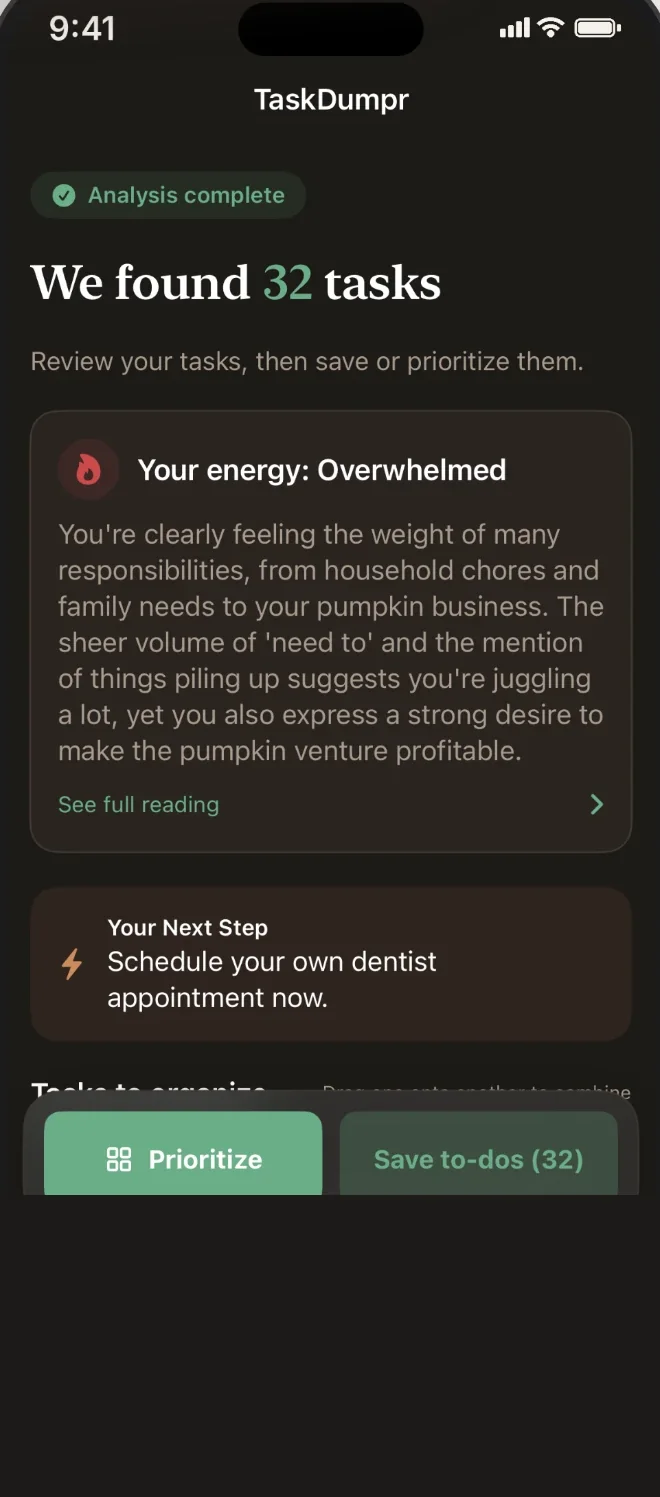
Dump everything out of your head and let the Eisenhower Matrix sort it for you. Takes less than 10 minutes.
Start your brain dumpStep one: get it out of your head
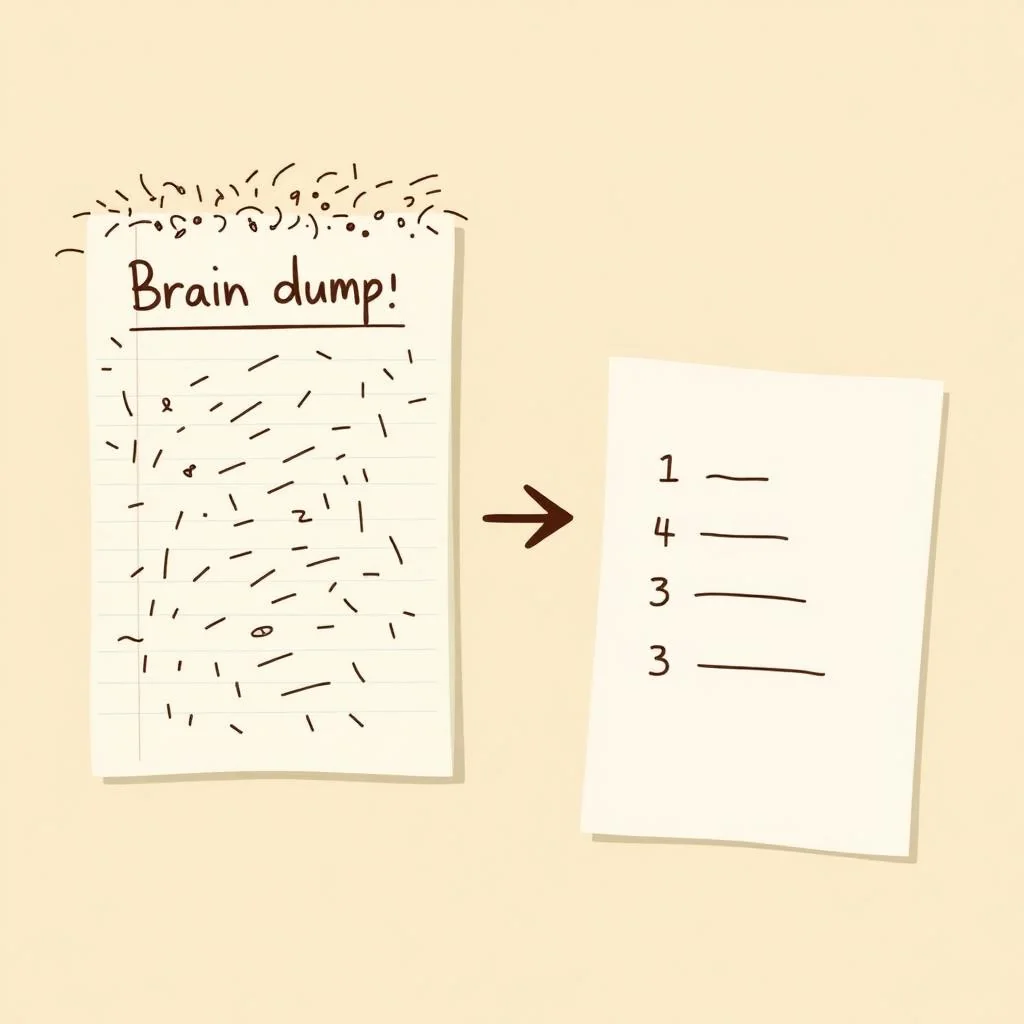
You cannot prioritize what you cannot see. And you cannot see clearly when your working memory is maxed out. The first step is always the same: brain dump. Get every single task, worry, and obligation out of your head and onto paper or screen.
This is not optional. Research on cognitive offloading consistently shows that externalizing information frees up working memory for higher-order thinking. You literally think more clearly when your brain is not trying to hold everything at once.
Do not filter while you dump. Do not judge. Do not try to prioritize as you go. That defeats the purpose. Get everything out first. Prioritize second. Your brain is not capable of doing both simultaneously when it is under load.
Step two: separate feeling from fact
Once everything is externalized, go through the list and ask one question about each item: "Is this actually time-sensitive, or does it just feel that way?"
You will be surprised how many "urgent" items are not. The email that feels like it needs an immediate response can actually wait until tomorrow. The project that feels like it is behind schedule is actually on track. The errand you have been stressing about has no real deadline at all.
Emotional urgency and actual urgency feel identical from the inside. The only way to distinguish them is to look at each task from the outside, which is exactly what writing them down allows you to do.
If you notice that most of your "urgency" is actually anxiety, that is valuable information. It means the fix is not doing more, faster. It is calming your nervous system so you can think clearly.
Step three: pick one thing
After sorting, you will have a much shorter list of things that are actually both urgent and important. From that list, pick one. Not three. One.
Research from the American Psychological Association on "choice overload" shows that having too many options creates decision paralysis. The paradox of feeling like everything is urgent is that you end up doing nothing because you cannot choose where to start. Narrowing to one item breaks the paralysis.
This does not mean the other tasks disappear. It means they have a place. They are written down, categorized, and scheduled. They are not lost. They are just not first. That distinction, knowing something is handled even if it is not done yet, is what your brain needs to stop panicking.
The permission to eliminate
One of the most powerful outcomes of this process is discovering what you can stop doing entirely. The Eisenhower Matrix has a fourth quadrant for a reason: some tasks should not be done at all.
These are the commitments you made out of guilt, the tasks that serve someone else's priorities, the habits that no longer align with your goals. They sit on your list generating stress without generating value. Letting them go is not quitting. It is strategic.
If you are someone who has been running on urgency for a long time, you might recognize the early signs of burnout. The inability to prioritize, the feeling that everything matters equally, the exhaustion that does not improve with rest. These are signals, not failures. And the first step is always the same: stop, dump, sort, choose.
Urgency is a feeling, not a fact
The reason everything feels urgent is not that you have too much to do. It is that your brain cannot tell the difference between what matters and what does not while it is overloaded. Fix the overload and the urgency quiets down.
This is not about becoming a better planner or finding the right productivity system. It is about giving your brain what it needs to function: external storage for everything it is trying to hold, and a simple framework for deciding what comes first.
You do not have fifteen urgent things. You have fifteen things your brain cannot sort while it is full. Empty it first. Then decide.
Try TaskDumpr free
Empty your head in one go and let TaskDumpr split it into sorted, prioritized tasks. No card needed.
Start a free brain dump