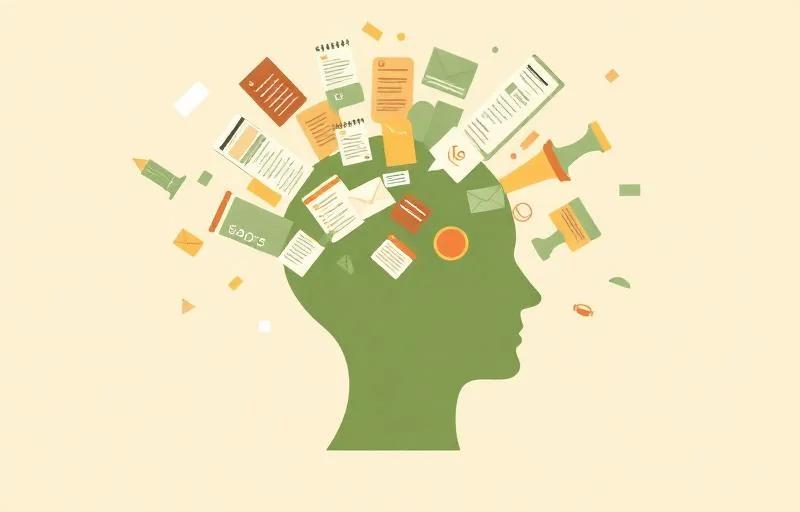
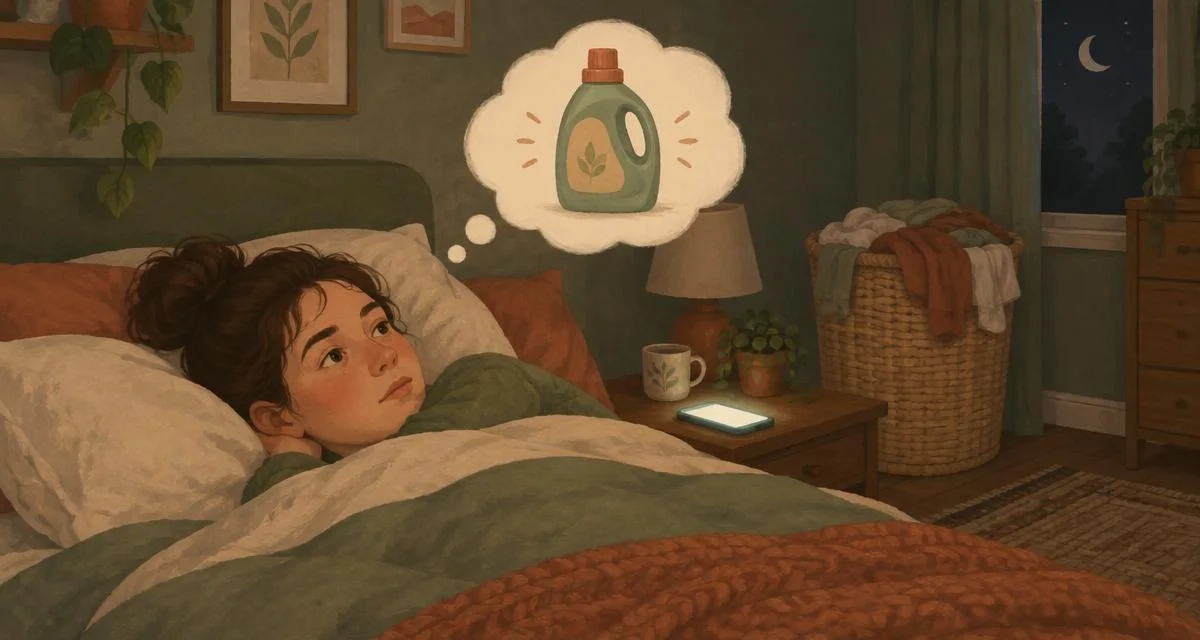
You have been out of laundry detergent for eleven days. You know this with absolute certainty, because your brain reminds you every single night at 11pm, the moment your head hits the pillow. "Detergent," it whispers, urgently, like it's breaking news. You were at the store today. You walked directly past the detergent aisle. Your brain said nothing. It was apparently saving the information for bed.
Meanwhile, the important email you need to send? That one only exists in the shower. You compose it beautifully in there, every morning, water streaming down, no keyboard in sight. Then you towel off, walk to your desk, sit down in front of an actual email machine, and it's gone. Your brain, which had so much to say fifteen minutes ago, now offers you nothing but a vague sense that you were supposed to do... something.
If you remember tasks at random times and forget them at every useful one, congratulations: your memory is working exactly as designed. That's the problem. The design is the problem.
Your memory isn't broken, it's filed weird
The kind of memory that handles "remember to do X later" has a name: prospective memory. It's a branch of memory research shaped heavily by psychologists Gilles Einstein and Mark McDaniel, and its central finding explains your entire life: prospective memory is overwhelmingly cue-dependent.
Your brain doesn't store future intentions on a timeline, ready to fire at the right moment. It stores them attached to contextual cues, and the memory fires when it encounters a matching cue, whenever and wherever that happens to be.
So "buy detergent" doesn't get filed under "next time you're at a store," which is what you'd want. It gets filed under laundry. The hamper. The smell of the laundry room. The specific ambient guilt of the unwashed towel pile. Which means the memory fires when you're near laundry cues, and you are never nearer to laundry cues than at 11pm, in bed, next to the hamper, physically incapable of buying anything.
The store, meanwhile, is full of store cues. Bread cues. Checkout-line cues. A wall of forty detergents that somehow does not read as "detergent" to a brain that filed the task under "hamper." You didn't forget. The file just never got opened, because you never walked past the filing cabinet.
Why you remember in the shower and forget at your desk
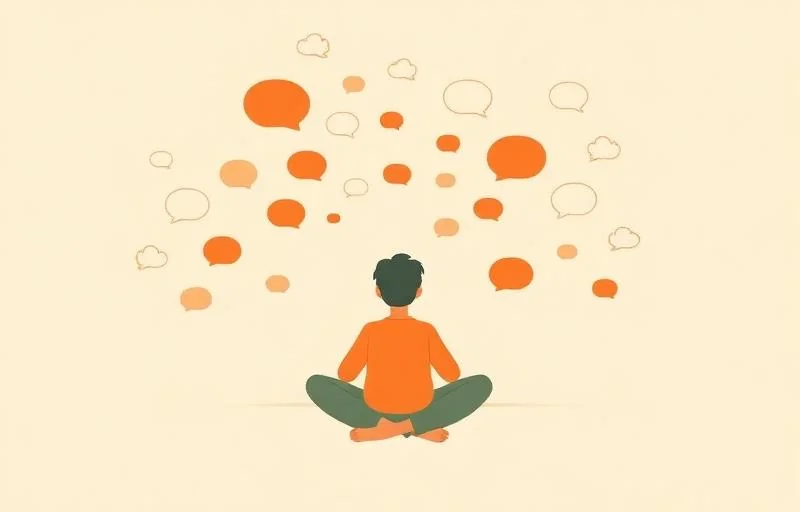
The shower email works the same way in reverse. At your desk, your working memory is slammed. Working memory, the mental scratchpad where active thoughts live, holds only a handful of items at once, and at your desk every slot is taken: the meeting in ten minutes, the Slack pings, the tab situation. Your brain triages hard, and "that email" loses to whatever's on fire.
In the shower there's no competition. No inputs, no demands, warm water, mild sensory white noise. Your mind wanders, and the unfinished stuff floats up. This is the Zeigarnik effect doing its thing: unfinished tasks stay mentally active and resurface whenever there's an idle moment to resurface into. The shower isn't magic. It's just the only meeting room where your open loops can finally get on the agenda.
Which is why the email arrives there, fully drafted, and evaporates at the desk. The desk cues (screens, noise, urgency) crowd it back out. Different room, different files.
Stop trying to have a better memory
Here's where most people go wrong: they treat this as a memory problem and try to fix the memory. Try harder to remember. Repeat it three times. Tie a mental string around a mental finger. And it keeps failing, because you cannot cue-proof a cue-dependent system through willpower. You will never convince your brain to file detergent under "store." It likes its filing system. It's been using it for a very long time.
The fix is not better memory. The fix is instant capture at the moment of firing.
When the thought pops, wherever it pops, you have a window of a few seconds while it's in working memory. If you get it out of your head and into somewhere trusted during that window, everything changes. If you don't, it sinks back into the files, waiting for the next hamper.
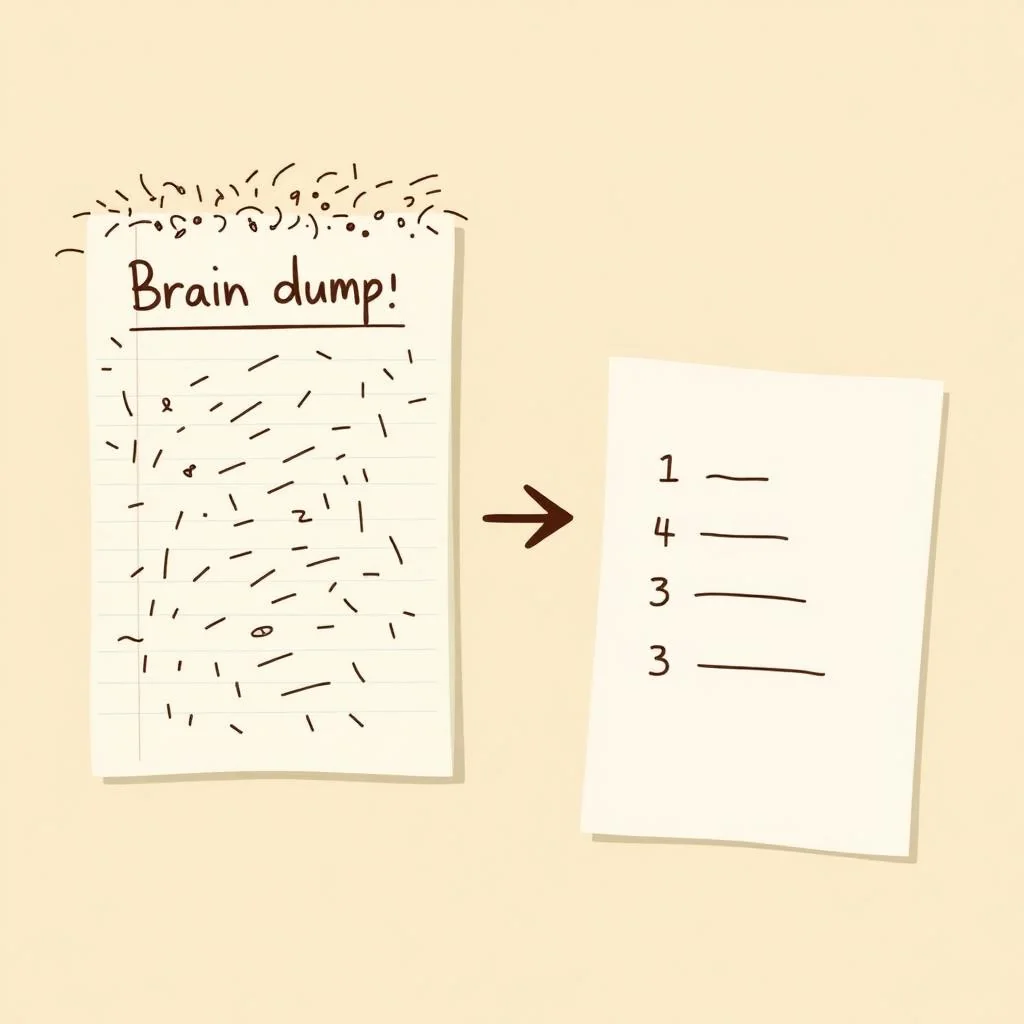
And here's the beautiful part, the reason capture isn't just a coping mechanism but an actual off switch: research by E.J. Masicampo and Roy Baumeister (2011) found that the nagging of unfinished goals largely eased once people made a concrete plan for them. The brain doesn't need the task done to let go of it. It needs the task handled, stored somewhere it trusts will bring it back at the right time. Capture the thought, and the 11pm broadcasts quiet down. That's the whole logic of a brain dump compressed into ten seconds.
The 10-second rule for thoughts that fire at weird times
The catch: capture only works if it's easier than remembering. If the thought arrives in bed and capturing it means finding your phone, opening an app, navigating to the right list, choosing a project, and typing with your thumbs at 11pm, you will not do it. You'll say "I'll remember," which, as established, you will not.
So the bar is brutal: capture has to take about ten seconds, work anywhere, and require zero decisions. Which is exactly why voice wins. Speaking is faster than typing, works while your eyes are closed, and doesn't ask you to categorize anything mid-thought. We dig into this more in our guide to voice to-do list apps.
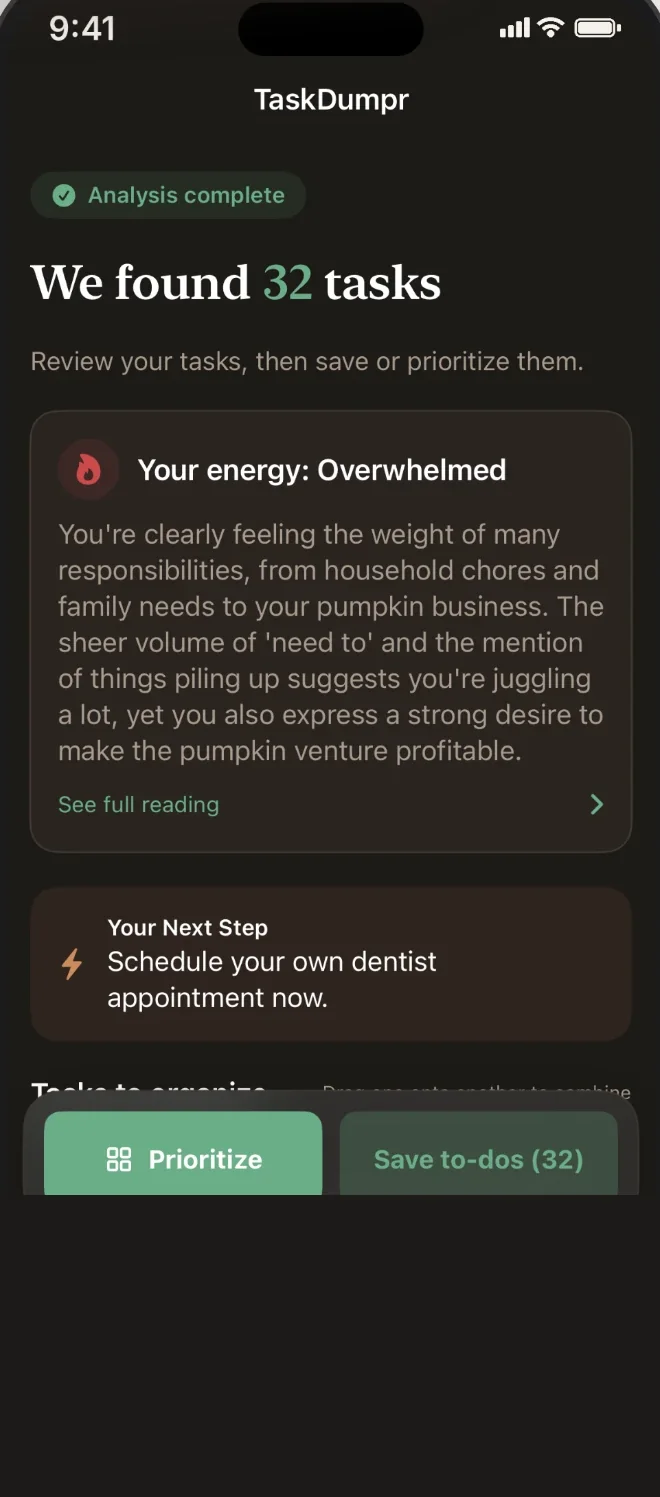
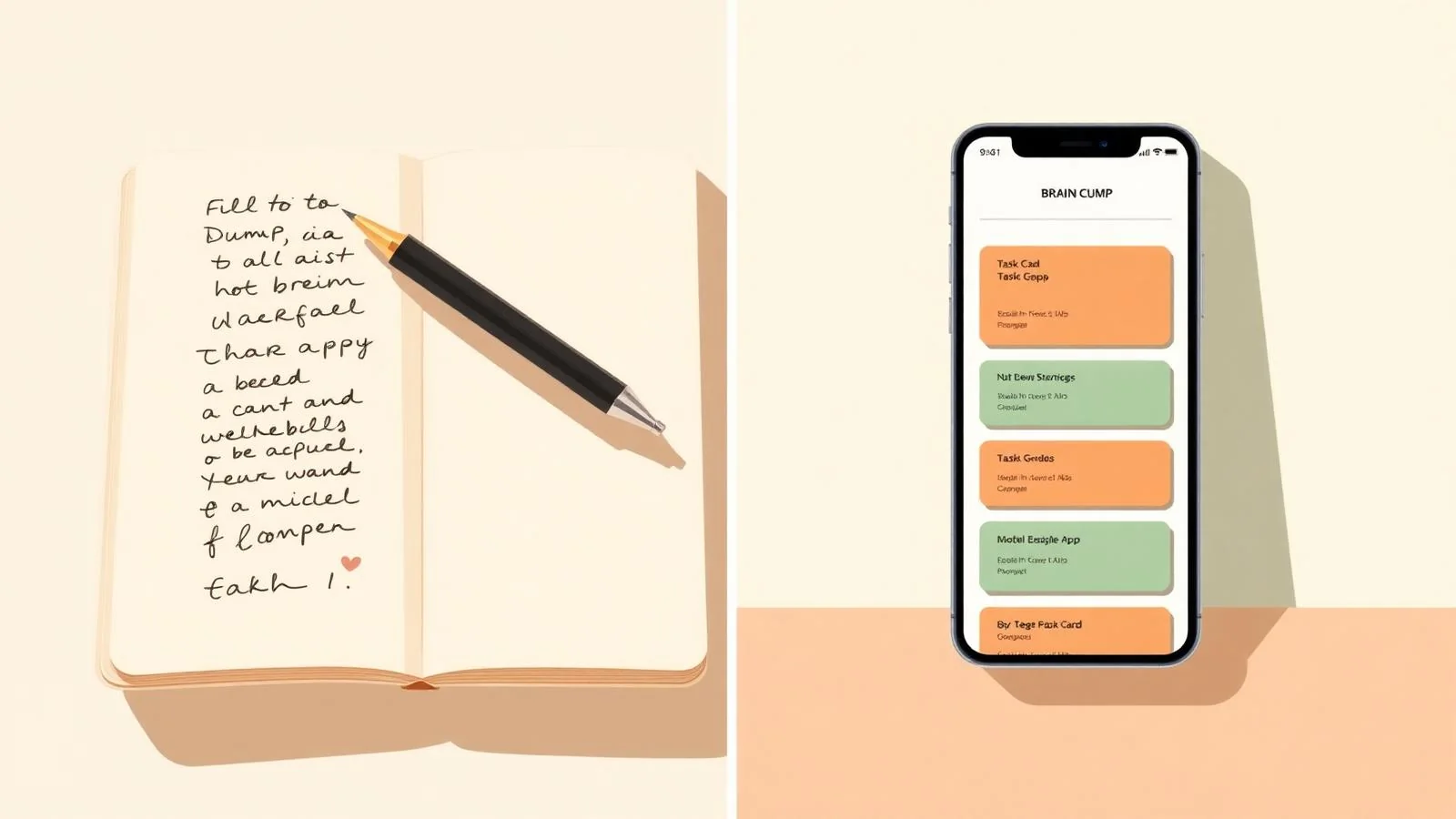
This is the entire reason TaskDumpr is built around dumping first. Open it on the web or the iPhone app, whichever is within arm's reach, hit voice input, and mumble "detergent" into the void. Done. No list to pick, no fields to fill. Later, when you're a functioning human at a desk, TaskDumpr sorts what you captured into an Eisenhower Matrix for you, so the 11pm mumbles become an actual plan without you doing the filing.
Detergent lands where it belongs, the shower email gets a real slot, and the stuff that turns out to be worry rather than work can go to Let Go instead of haunting your list. It's free to start with 3 brain dumps and 3 Let Go sessions a week, which covers a respectable amount of midnight detergent news.
The point isn't the app. The point is the behavior: a trusted place that's always ten seconds away. That's what makes your brain finally stand down.
Catch them all week, then sort once
Once you start capturing at the moment of firing, a pattern emerges: the random-time reminders mostly stop being random. They cluster in the low-input moments: bed, shower, commute, the walk between meetings. Those are your brain's natural broadcast hours. Work with them. Capture everything as it fires, then process it all in one sitting rather than reorganizing your life at 11pm.
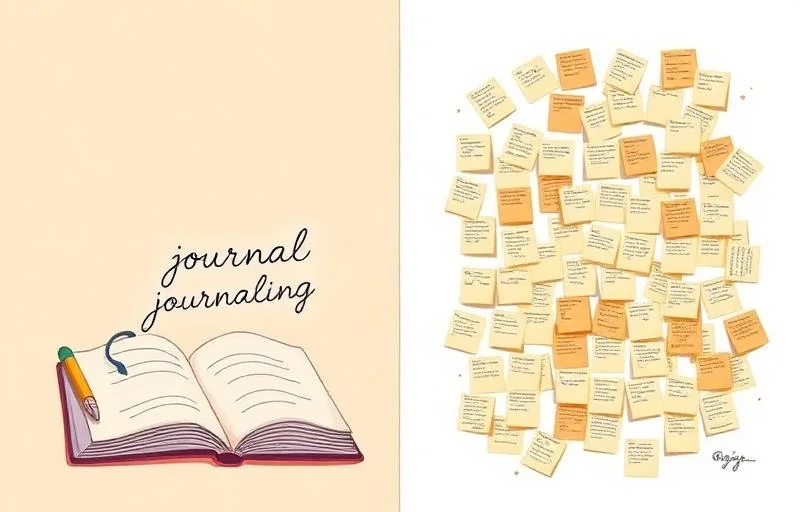
A lot of people anchor this with a morning brain dump, clearing the overnight pile before the day starts, so the desk hours actually go to doing. If the thoughts mostly arrive at bedtime, a brain dump before sleep works the same way.
You'll notice something else, too: you stop bracing. That low-grade vigilance, the feeling of holding seventeen slippery things and knowing you're about to drop one, quietly dissolves. Not because you remember better. Because nothing is riding on your memory anymore.
Your brain was never meant to be the place where tasks are stored. It's the place where tasks are noticed. Give the noticing somewhere to land, and it will stop yelling about detergent in the dark.
The moment a task pops into your head isn't the moment to do it. It's the moment to catch it.
Keep reading
Try TaskDumpr free
Empty your head in one go and let TaskDumpr split it into sorted, prioritized tasks. No card needed.
Start a free brain dump