
You have probably seen a Sunday reset on your feed. Fresh sheets snapped onto the bed in slow motion, a fridge restocked with rows of identical glass containers, a week of lunches portioned out by noon, and a planner spread in three colors of pen, all set to a lo-fi soundtrack. It takes three hours and looks incredible.
Maybe you have tried your own version. Two loads of laundry, a grocery run, chicken and rice split into five containers, and a planner session that ran past 9pm. Then on Monday morning you opened your laptop and the tight feeling in your chest was still there, because the invoice you promised a client, the dentist appointment you keep postponing, and the reply a friend has been waiting on for two weeks never made it onto the page.
That is not a discipline failure. It is a category error. Almost every weekly reset online is built around a physical environment because a clean and organized home is the only thing that can be captured. But the thing that ruins your Monday is not how good your home looks on camera, it's how your mind looks inside. Forty loose ends you carried into the week without writing down, and no amount of curation of your surroundings touches those.
Here's the version of the reset that works. Twenty minutes, no containers, no aesthetic. It clears the mental backlog at the source, giving you more peace of mind and clarity while doing anything physical.
Why a week is the right interval
The weekly review is the oldest idea here. David Allen built it into Getting Things Done as the practice that holds the entire system together, and GTD has called it the critical success factor. Not the capture. Not the lists. The review.
The logic is about how long your head can hold an unreviewed pile. A day is too short: you end up re-listing the same things and the habit feels pointless. A month is too long: by then the backlog has grown past the point where a single sitting can clear it, so you skip it, and skipping it once usually means skipping it permanently.
A week is roughly the interval at which the pile is big enough to be worth clearing and small enough to clear in one sitting.
There is also the thing your brain does with loose ends. Unfinished tasks can keep resurfacing until your brain believes a plan exists for them. Not until they are done. Until there is a plan. A weekly reset is how you give it that plan on a schedule it can rely on, which is what eventually quiets the late-night inventory.
Why most weekly resets do not work
Three reasons, and it is worth naming them before you build a routine you will abandon.
They are domestic, not cognitive. Laundry, groceries, a clean and organized surrounding complete with a shiny wiped-down counter are genuinely nice. None of them addresses the forty open loops you are carrying in your head. You can have an immaculate kitchen and a completely unmanaged mind, and most of us do.
They are aspirational, not functional. The reset content that performs well online is designed to be watched, not done. It is built around a version of your week that has four uninterrupted hours in it. Measuring your actual Sunday against that one mostly generates the feeling we wrote about in productivity guilt: the sense of falling short of a standard you never agreed to.
They front-load planning before emptying. This is the structural mistake. People open a planner and try to plan a week while everything is still in their head, so they plan around the six things they happen to remember and miss the eleven they do not. Emptying has to come first. Planning from a full head is planning from a bad sample.
The 20-minute weekly reset
Set a timer. Two phases: empty, then sort. You are not doing any of these tasks right now, and you are not tidying anything.
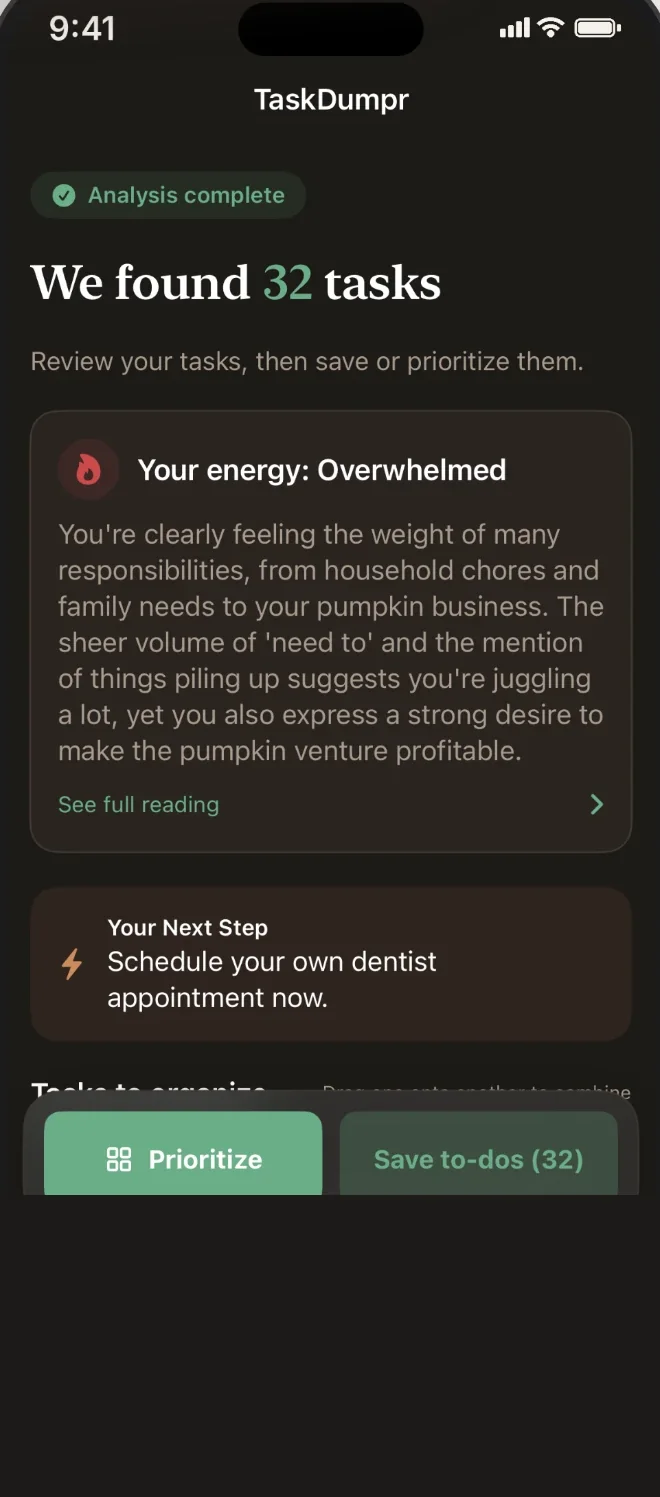
Paper works. So does a notes app, or TaskDumpr on your phone or in your browser, which takes voice if talking is easier than typing at the end of a week.
Phase one: empty (12 minutes)
Five prompts. The specificity is the point, because “what do I need to do this week” returns almost nothing while a pointed question shakes loose everything attached to it. Our brain dump trigger list has more if any category comes up thin.
1. What did not happen last week (3 minutes)
The rollover pile. This is the one most resets skip, which is why the same three things migrate across four weeks of planners untouched.
- What was on last week's list that is still not done?
- What did you tell someone you would do and have not?
- What have you now moved forward three weeks running? Be honest about whether it is ever getting done.
2. What is landing this week (3 minutes)
- What is actually on the calendar, and what does each of those things require beforehand?
- What deadline is closer than it feels?
- Who is expecting something from you, and when?
3. What is quietly building (2 minutes)
The things with no due date that get expensive if ignored.
- What appointment, renewal, or repair has been pending for over a month?
- What is running low, breaking down, or about to expire?
- What relationship or conversation have you been postponing?
4. What is in your head that is not on any list (2 minutes)
- What did you think about in the shower this week?
- What woke you up, or kept you from falling asleep?
- What keeps coming back even though you keep dismissing it?
5. You (2 minutes)
- What did you want to do last week and did not?
- What are you dreading this week?
- What would make this week feel survivable rather than just full?
Copy this prompt list
Didn't happen: unfinished from last week, promises I made, what I've moved forward three times. Landing this week: calendar items and their prep, the deadline that's closer than it feels, who's waiting on me. Quietly building: pending appointments and renewals, what's running low or breaking, the conversation I'm postponing. Not on any list: shower thoughts, what kept me up, what keeps coming back. Me: what I didn't get to, what I'm dreading, what would make this week survivable.
Phase two: sort (8 minutes)
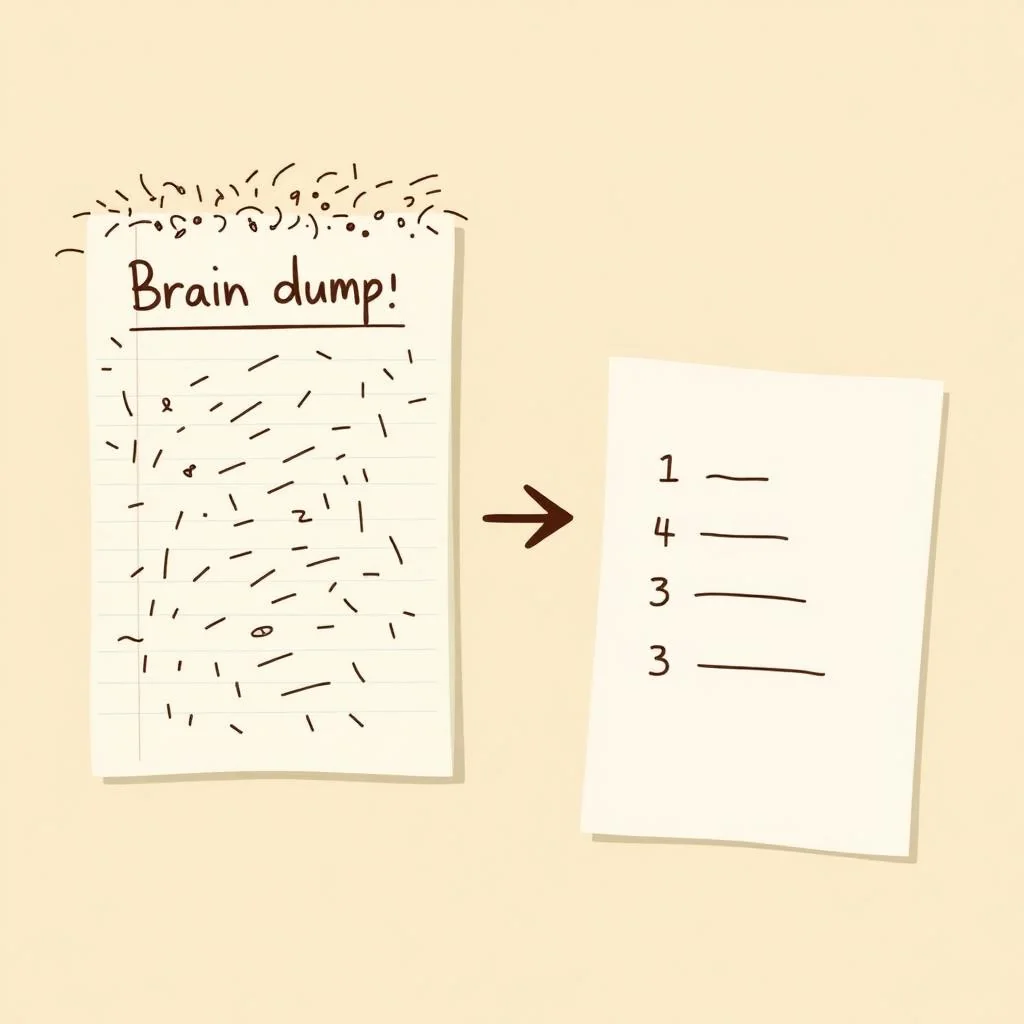
A raw dump feels good for about an hour. Then it is a 50-item list staring at you, which carries its own dread. The dump only becomes relief when it becomes a plan.
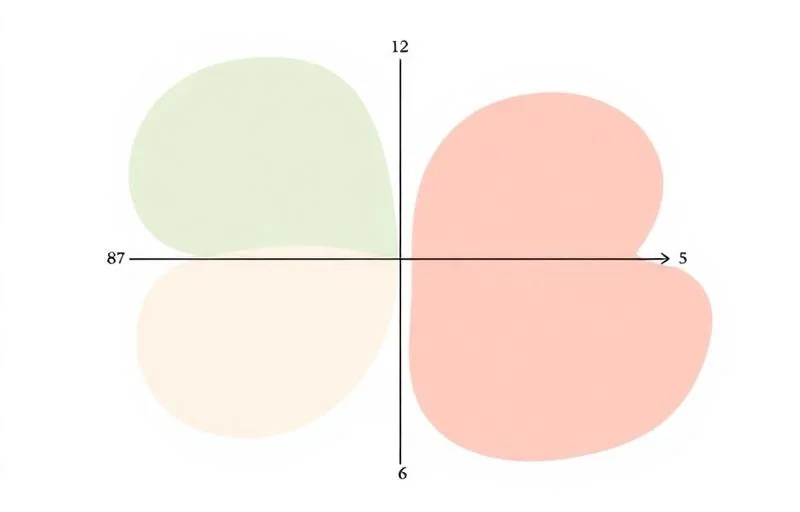
Sort by urgency and importance. TaskDumpr helps with this, starting with a brain dump. Everything you dumped gets split into individual tasks automatically, and you consciously sort them into an Eisenhower Matrix. Do first, which is the genuinely time-bound handful. Schedule, which is most of the “quietly building” category. Delegate/Hand off, which is a real option now that you have a visible list to give someone instead of a vague sense that you are doing too much. And Eliminate, which is usually larger than you expect after you've taken the time to dump and review.
Then do the one thing that makes the whole exercise hold: pick three items for the week. Not thirty. Three. Everything else stays visible but uncommitted. A week with three real commitments and a parked list beats a week with twenty commitments and a guilt reflex.
Some of it is not a task
“I think I am burning out” has no checkbox. Neither does “I have been a worse friend this year than I want to be.”
Those do not belong on a to-do list, because they will sit there generating guilt without ever being completable. TaskDumpr has a Let Go space for exactly this, somewhere to put the worries and the impossible standards and release them rather than manage them. A weekly reset that only ever produces tasks will eventually feel like a machine for generating obligations, which is not a habit anyone sustains.
It does not have to be Sunday
Sunday is the default because the internet decided it was, not because it is optimal. For a lot of people it is actively the wrong day: doing a reset on Sunday evening means running an inventory of everything you owe right before you try to sleep, which is a reliable way to ruin the night.
Alternatives that work better for some people:
- Friday afternoon. Close the week while it is still fresh, then actually have a weekend. Best if you work a standard week.
- Monday morning, first thing. Before email. The backlog is freshest and you are planning into the day rather than into the dark.
- Wednesday night. A midweek reset catches the week while there is still time to save it. By Wednesday you know which plans survived Monday and which did not, and you still have two working days to recover the slippage instead of rolling it forward. It is also lighter than a Sunday inventory, because you are sorting half a week, not facing a whole one.
- Saturday morning. Enough distance from the week to see it clearly, enough runway to act on anything urgent.
Pick the slot you will actually keep. A reset that happens every Friday beats an aspirational Sunday ritual that happens twice a quarter.
The five-minute version
Some weeks you will not have twenty minutes, and that's OK. Don't treat this full version as the only version. When the choice is between a short reset and none, take the short one.
Two prompts, five minutes: What is still undone from last week? And what is coming this week that I have not prepared for? Dump, sort, pick three. That is enough to keep the habit alive until a week with more room in it.
If you want a daily companion to this, the 5-minute morning brain dump covers the shorter, more frequent version. They work well together: the weekly one handles the backlog, the daily one handles the overnight accumulation.
Frequently asked questions
How long should a weekly reset take?
Twenty minutes is a good target for a mental weekly reset. Under ten minutes often skips the emptying phase, while more than forty-five minutes usually means you have started doing tasks instead of sorting them.
What is the difference between a weekly reset and a weekly review?
Weekly review is the GTD term for a structured pass over an existing system. Weekly reset is a newer, more casual phrase often used for domestic routines. This version keeps the review logic but starts by emptying your head, so no existing system is required.
Should I do a weekly reset if I do not have a task system?
Yes. If you have no system, more of the backlog is probably living in your head. You do not need a task system to begin. You only need somewhere to put things down.
Why do I keep abandoning my weekly reset?
The routine may be too long, focused on your home instead of your head, or ending with an unsorted list that feels like more work. Keep it short, make it cognitive, and always finish with a sort and a shortlist.
What should I do with things I keep rolling over?
Treat the pattern as information. A task that survives three resets may not be important, may be blocked by something unnamed, or may belong to someone else. Dropping it is also a decision.
Keep reading
Sources
Try TaskDumpr free
Empty your head in one go and let TaskDumpr split it into sorted, prioritized tasks. No card needed.
Start a free brain dump