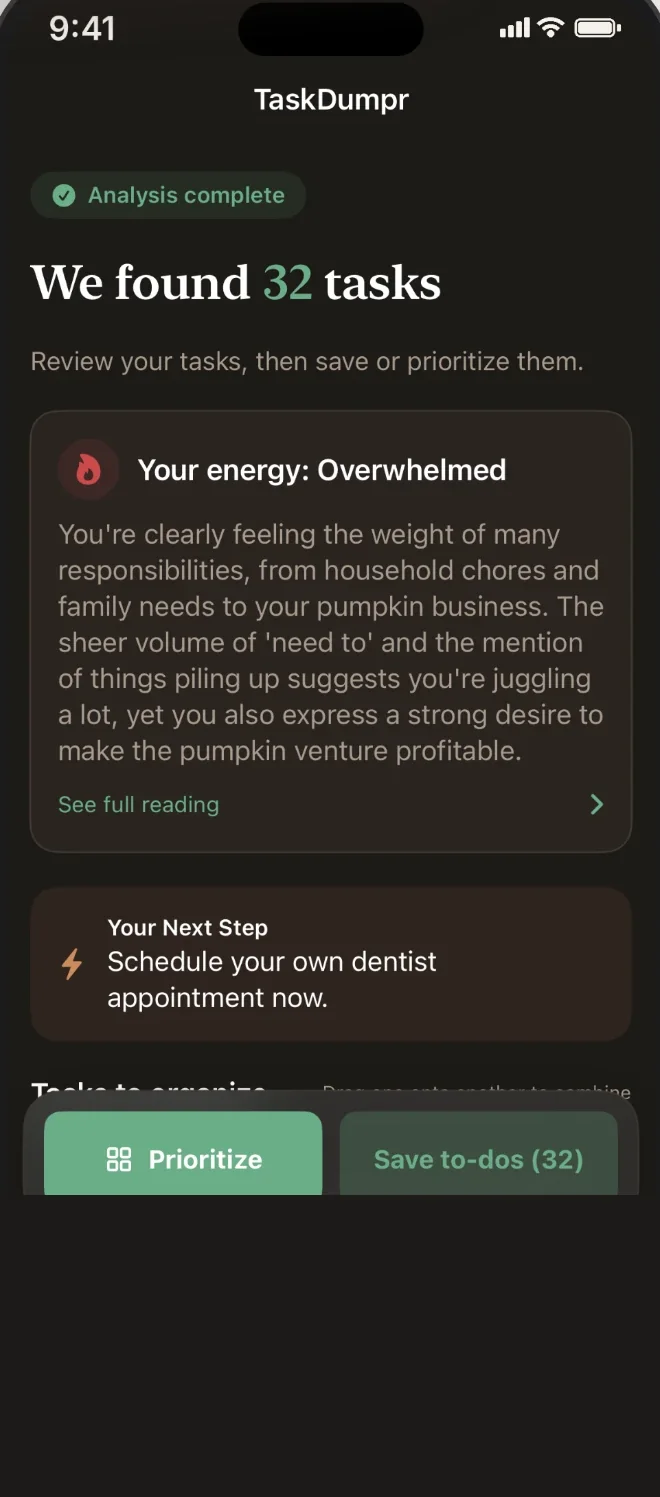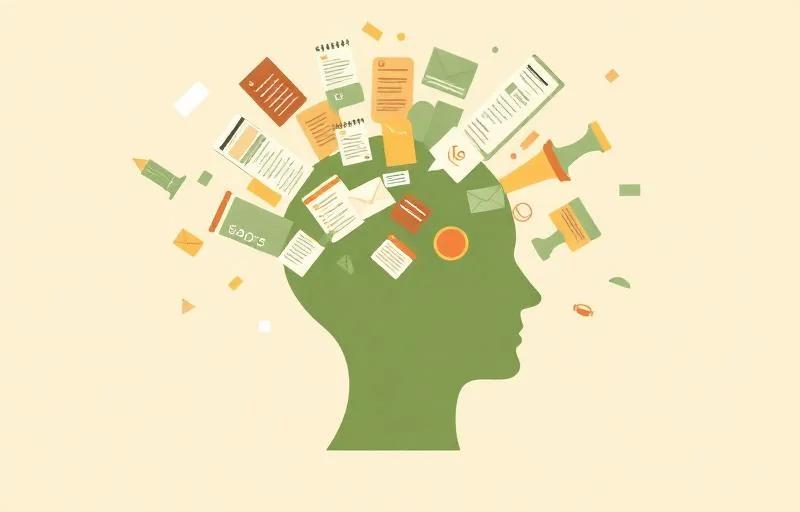

It is 11pm. You are exhausted. Your body is ready for sleep. But your brain has other plans. It is running through tomorrow's meeting, replaying an awkward conversation, reminding you about the dentist appointment you keep forgetting to book, and calculating whether you can afford that car repair.
You flip the pillow, adjust the blanket, close your eyes tighter. Nothing works. Your brain treats bedtime like a boardroom meeting it has been waiting for all day.
This is not insomnia in the clinical sense. It is cognitive hyperarousal. And there is a surprisingly simple technique that research shows can help you fall asleep faster: writing it all down before you get into bed.
Why your brain gets louder at night
During the day, your brain is busy processing external stimulation: conversations, work tasks, notifications, traffic. There is so much incoming data that background worries struggle to get airtime. They sit in a queue, waiting.
At night, the external noise drops. The default mode network, a brain system that activates during rest and self-reflection, takes over. It starts processing everything you have been too busy to think about. Unfinished tasks, unresolved emotions, future uncertainties. They all flood in at once.
Sleep researchers call this "pre-sleep cognitive arousal." The more unfinished business your brain is tracking, the longer you lie awake.
Your brain is not malfunctioning. It is doing exactly what it is designed to do: process incomplete tasks. The problem is that bedtime is the worst possible time for it to start.
The link between anxiety and insomnia
If you struggle with nighttime racing thoughts, you are not alone. The Anxiety and Depression Association of America reports that anxiety is one of the most common causes of sleep difficulty, and the relationship runs both ways. Anxiety disrupts sleep. Poor sleep increases anxiety. The cycle feeds itself.
As we explored in our guide to brain dumping for anxiety, the core issue is not a sleep problem. It is a thinking problem. You cannot relax a mind that believes it has unfinished work to do. It will keep spinning until it feels safe to stop.
The key insight is that your brain does not distinguish between "genuinely urgent" and "feels urgent." At 11pm, a work email you forgot to send and a vague career worry feel equally pressing. Both keep you awake. Both need to be addressed before your brain will stand down.
How brain dumping quiets the noise
In 2018, researchers at Baylor University published a study in the Journal of Experimental Psychology that tested a simple intervention: they asked participants to write a to-do list of upcoming tasks before going to sleep. A control group journaled about tasks they had already completed that day.
The results were striking. Participants who wrote about future tasks fell asleep an average of 9 minutes faster than those who wrote about completed ones. And the more specific the to-do list, the faster they fell asleep.
The mechanism is cognitive offloading. When you write something down, your brain registers that the information is stored somewhere safe. It no longer needs to keep cycling back to it. The open loop closes. If you are unfamiliar with the technique, our complete guide to brain dumping explains the full process.
This is why brain dumping before bed is not just journaling. It is a deliberate signal to your brain: "Everything important is captured. You can stop now."
Try a brain dump right now
It takes less than 10 minutes. Get everything out of your head before bed and feel the difference tonight.
Start your brain dumpA 10-minute bedtime brain dump routine
This is not complicated. The goal is to move everything from your head to paper (or screen) before your head hits the pillow.
- Put the phone in another room. Scrolling before bed is the opposite of brain dumping. It adds stimulation. You want to subtract it.
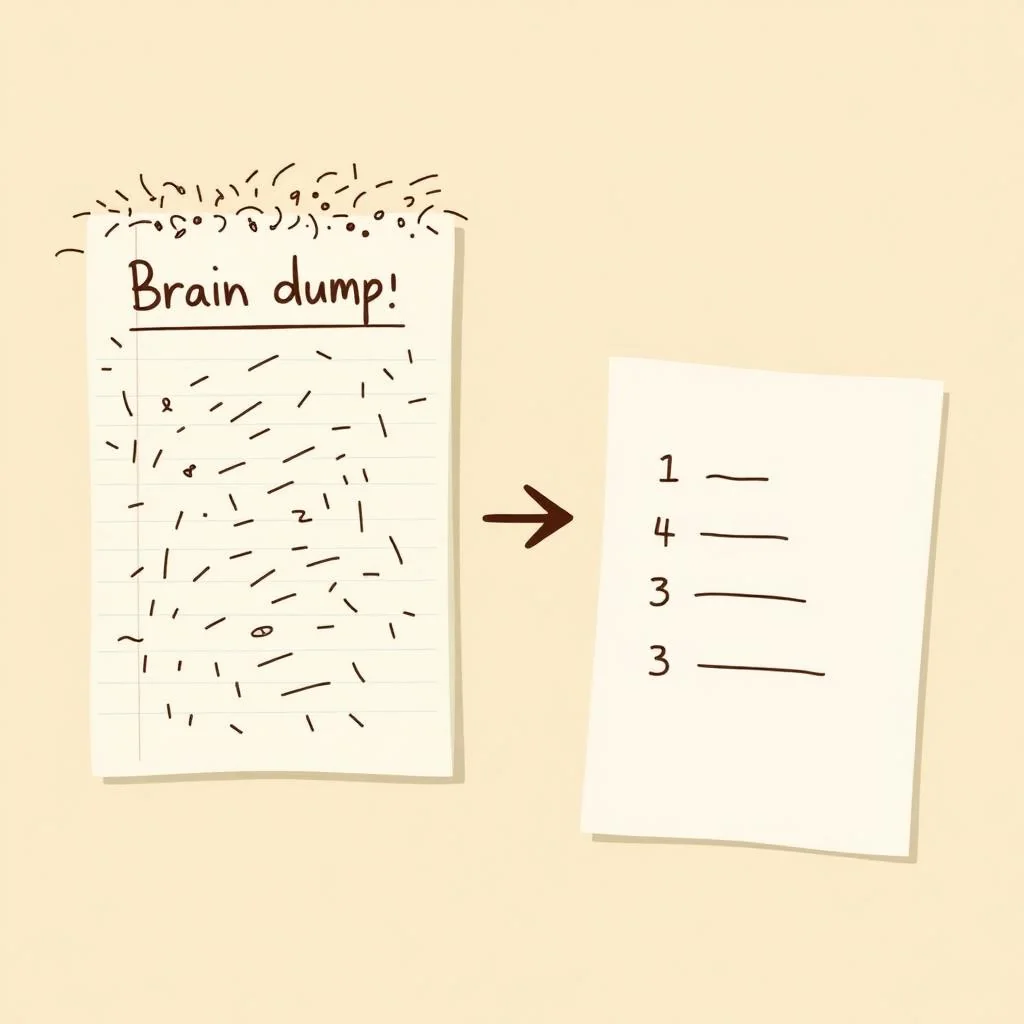
- Grab paper or open the app. Set a timer for 5 minutes. Write down every single thing on your mind. Tasks, worries, ideas, random fragments. No editing.
- Sort into two piles: actionable and emotional. Actionable items are things you can do something about tomorrow. Emotional items are worries, regrets, and what-ifs that have no clear next step.
- Release the emotional items. You are not going to solve your career trajectory tonight. Acknowledge the worry, then consciously put it down. This is not suppression. It is a deliberate choice to stop carrying it while you sleep.
- Do not prioritize. That is a morning task. At night, the only goal is to empty. Prioritizing activates your planning brain, which is the opposite of what you need right now.
What about the worries that are not tasks?
The 3am fears are the hardest. Is my relationship okay? Am I making the right career choices? What if the test results come back bad? These thoughts are not tasks. You cannot schedule them or check them off. But they take up enormous mental space.
These worries need a different kind of attention. They need to be named, acknowledged, and then deliberately released. Cognitive behavioral therapy research shows that giving a worry a moment of conscious attention and then choosing to set it aside is far more effective than trying to suppress it.
This is the purpose of letting go as a practice. TaskDumpr includes a dedicated Let Go feature where you can write down what weighs on you and symbolically release it. For many users, this single step is the difference between lying awake and falling asleep.
Building a sleep-friendly wind-down habit
A brain dump works best when it is part of a wind-down routine, not a standalone event. The goal is to gradually shift your brain from "active processing" to "ready for sleep."
- 30 minutes before bed:Do your brain dump. Get everything out.
- 20 minutes before bed:Switch to a low-stimulation activity. Reading (physical book, not a screen), stretching, or a cup of herbal tea.
- Keep a notepad by the bed:If a straggler thought pops up after you have turned off the lights, write it down quickly and let it go. One line is enough. Your morning self will handle it.
The key is no screens after the dump. If you brain dump on your phone, close the app immediately and put the phone away. The content of the dump is helpful. The screen is not.
Why sleep apps and meditation apps miss the point
Sleep apps focus on the body: breathing exercises, ambient sounds, guided body scans. Meditation apps focus on present-moment awareness. Both can help, but they share a blind spot.
They do not address the cognitive clutter. You cannot breathe your way through a racing mind that is trying to remember if you paid the mortgage. You cannot meditate your way past the fear that you are about to get laid off.
As we explored in why productivity apps are broken, most tools ignore the cognitive and emotional dimensions of overwhelm. Sleep apps are no different. They treat the symptoms (tension, restlessness) while ignoring the cause (unprocessed thoughts).
Brain dumping addresses the root. Once the thoughts are out, the breathing exercises and ambient sounds can actually work because there is nothing left to fight against.
How TaskDumpr fits into a bedtime routine
TaskDumpr was designed for moments like these. A few features are particularly relevant for bedtime brain dumps:
- Voice input:You do not need to stare at a screen or type in the dark. Just speak your thoughts. The app captures them.
- Quick Dump mode:A focused 5-minute session designed for fast, unstructured brain dumps. Perfect for bedtime.
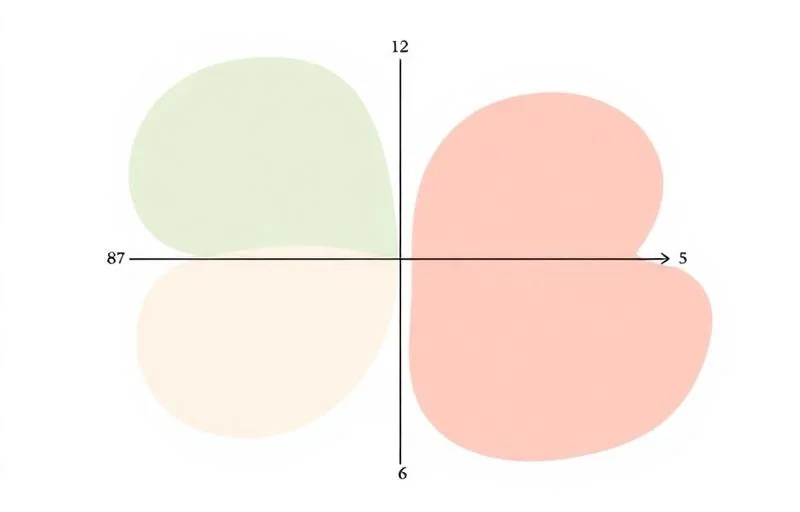
- The Eisenhower Matrix:In the morning, your dump is automatically sorted into Do, Schedule, Delegate, and Eliminate. The Eisenhower Matrix handles tomorrow's priorities so you do not have to do it in your head tonight.
- Let Go:A dedicated space for releasing the worries that are not tasks. Write them, watch them float away, and go to bed lighter.
You do not need to solve tomorrow tonight
The 11pm thought spiral feels urgent. Your brain is convinced that if you just think about it long enough, you will figure it all out. But you will not. You will just lose sleep and face tomorrow less equipped to handle the very things keeping you awake.
A 10-minute brain dump interrupts the cycle. It tells your brain: everything is captured, nothing will be forgotten, and you have permission to stand down.
You do not need to solve tomorrow tonight. You just need to put it down.
Try TaskDumpr free
Empty your head in one go and let TaskDumpr split it into sorted, prioritized tasks. No card needed.
Start a free brain dump